



Windows on the Wildlife
By Mark Loehrke
April 2026 View more Community
Gain a new view of animal rehab at the DuPage Wildlife Conservation Center
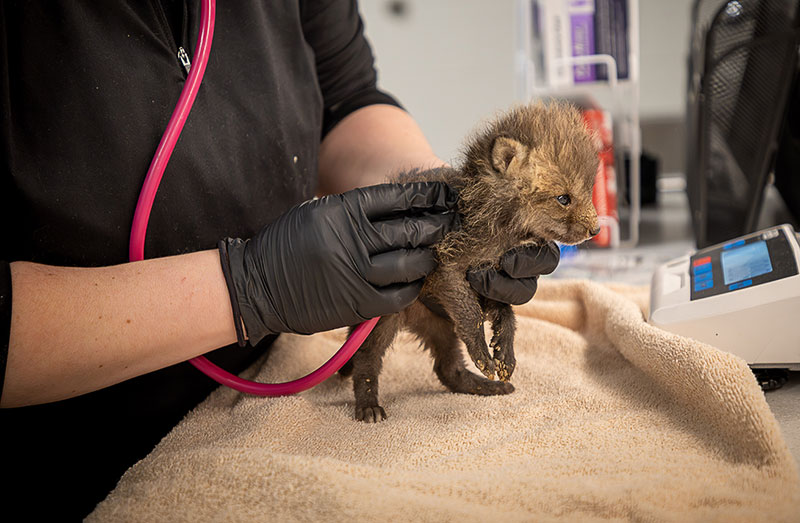
Three great horned owlets that fell from their respective nests. A red-tailed hawk covered in oil, affecting its ability to fly and stay warm. An orphaned fox squirrel pup. A young coyote with three broken limbs from a car collision, requiring X-rays and surgery.
In areas like ours where nature and civilization overlap, wildlife rescue and rehabilitation efforts like these cases are easy to take for granted. While critters that share our busy suburban landscape sometime need medical attention for injuries and illnesses, a lot goes into that important work—much more than many people realize. But when human residents have a chance to peek behind the scenes, they can glean a much better understanding of conserving fragile natural spaces and the animals that inhabit them.
That’s one of the ideas behind the new DuPage Wildlife Conservation Center (525 S. Park Blvd., Glen Ellyn), which provides not only a state-of-the-art place to perform this critical work, but a chance for the public to get a little more exposure to the people who are doing it—and the creatures that are benefiting from it.
Located within the 48-acre Willowbrook Forest Preserve, the new center replaces the Willowbrook Wildlife Center, which had provided these services under various names for more than four decades. But as space became tight and equipment needed upgrading over the years, the district began planning for a new center in 2022. Rechristened as the DuPage Wildlife Conservation Center to better highlight its range of wildlife-related activities and conservation, construction got underway in 2024.
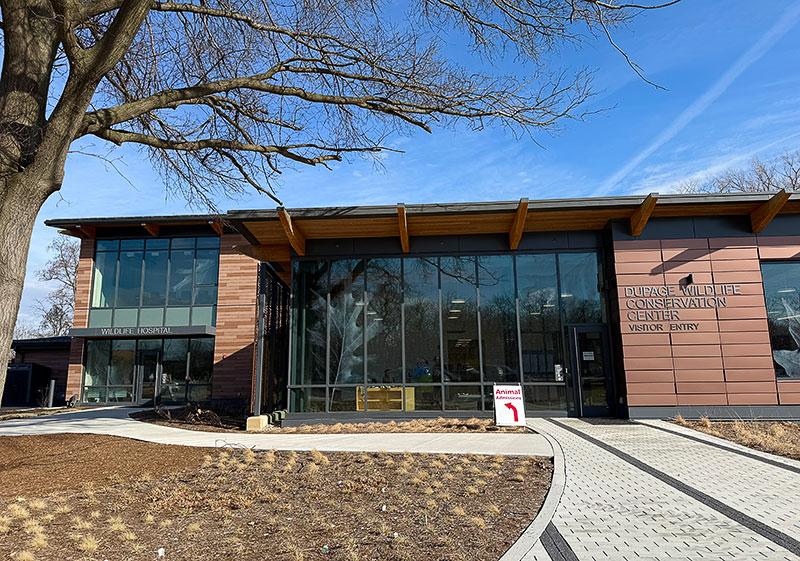
Nearly two years later, the result is a gleaming new 27,000-square-foot facility, whose $30 million cost was funded through a combination of federal and state grants, private donations, and support from the district. As a net-zero building, it was constructed of sustainable materials and has an alternative energy source (note its array of solar panels) to reduce its carbon footprint, designed to produce as much energy as it consumes to reduce greenhouse gas emissions. And while rehabilitation for the more than 11,000 animals that are expected to come through its doors every year continues to be the main focus, the new center also places renewed emphasis on educating visitors about the propagation of endangered and threatened species, as well as ways to peacefully coexist with our animal neighbors.
“It’s a much larger space than the previous visitor center, and it’s really focused on educating people on not only animal rehabilitation but also on their impact or potential impact on local wildlife,” says Dan Dorion, the center’s wildlife operations manager. To that end, the center now includes indoor and outdoor treatment and rehabilitation areas, educational exhibits on wildlife, an outdoor classroom, and an interpretive trail with observation areas.
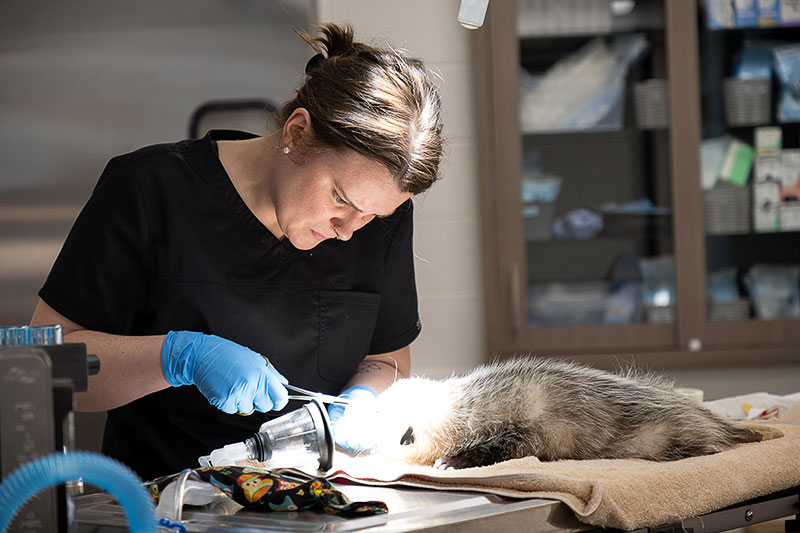
One of the real showstoppers of the revamped visitor center is a feature that offers an illuminating window into wildlife care—literally. New observation windows give visitors a chance to see the work of rehabilitation in real time, as animals are treated through the clinic, surgery, and rehab processes. While the windows won’t always be open for viewing—such as when staffers are treating a protected species or dealing with a sensitive matter that requires more privacy—most of the time during open hours visitors will be able to see the clinic in action (breeding seasons during the spring and fall tend to be the busiest periods).

And for those who can’t handle all the medical drama but still hope to connect with wildlife in a new way, two of the new windows showcase daily baby wildlife feedings—which sounds like a good body-and-spirit prescription for both man and beast. “It’s an opportunity to see what happens here, what’s entailed in this kind of care, and really to be part of the story,” Dorion says.
Patients run the gamut from tiny opossum joeys and migrating songbirds to mallard ducklings and little brown bats. Depending on the case, an animal might be cared for at the center anywhere from 24 hours (a warbler with head trauma) to 100 days (a fox with mange) to over a year (turtle with a shell fracture). As they become independent and ready for release, orphaned babies might stay anywhere from a month (an eastern cottontail kit) to six months (great horned owlet).
“It’s a great place for animal lovers, anybody interested in the environment, or really just anyone who cares about preserving wildlife and nature,” Dorion says. “For some it may spur their curiosity, while for others it might be something that inspires them to get more involved, either through a seasonal position or a volunteer opportunity.”
* * *
Did You Know?
Facts about the DuPage Wildlife Conservation Center in 2025:
Total animal admissions: 11,267
Unique species: 200 (including 43 endangered/threatened species)
Active volunteers: 232
Total answered phone calls: 14,397
Most phone calls in one day: 120 (May 29)
Busiest intake month: May (2,136 patients)
Busiest intake day: May 13 (123 animals admitted)
First animal of the year admitted: red-tailed hawk
Last animal of the year admitted: red-tailed hawk
1,000th animal admitted: orphaned Canada goose (April 18)
10,000th animal admitted: white-throated sparrow (Oct. 4)
First orphaned avian patient: great-horned owl (Feb. 10)
First orphaned mammal patient: eastern cottontail (March 27)
Largest litter of orphaned opossums: 12 (May 2)
First ever: northern harrier (Oct. 19)
Source: Forest Preserve District of DuPage County
Animal Rescue
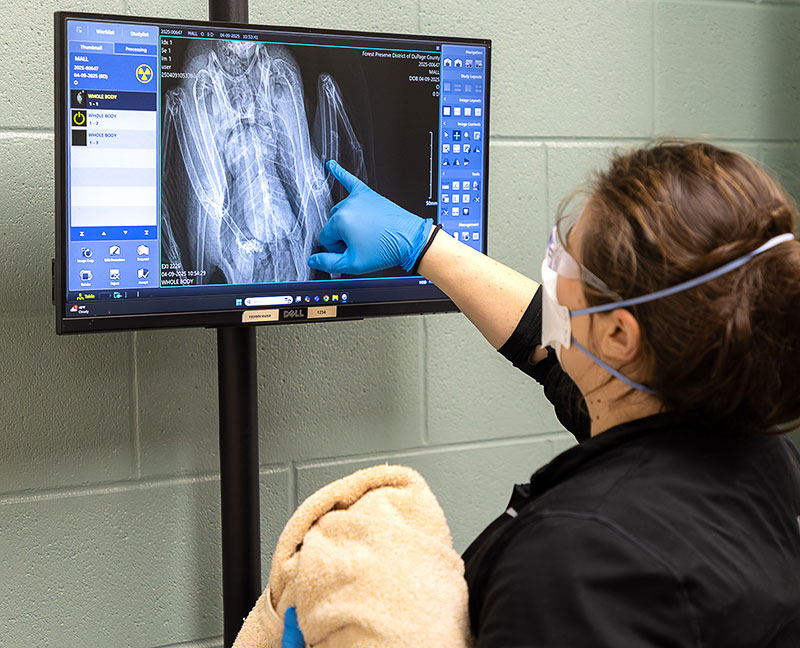
Where do the patients at the DuPage Wildlife Conservation Center come from? The center works with not only local police departments, animal control agencies, and wildlife rescue groups to bring in injured animals but also accepts calls from the general public.
Concerned citizens who come across a wild animal in need of help should look for clear distress signs such as obvious bleeding or fractures, a severe head tilt, or an inability to stand or move. They can then contact the center at 630-942-6200 to determine next steps; staff members field more than 14,000 calls from residents every year.
For more information and rescue advice, visit dupageforest.org/places-to-go/centers/wildlife-conservation.
Photos: Forest Preserve District of DuPage County (fox kit, opossum, X-ray); Jen Banowetz (exterior and interiors)
