




Screen Time Scrutiny
By Mark Loehrke
Appears in the July 2026 issue.
Heeding the mental and emotional health impacts on kids
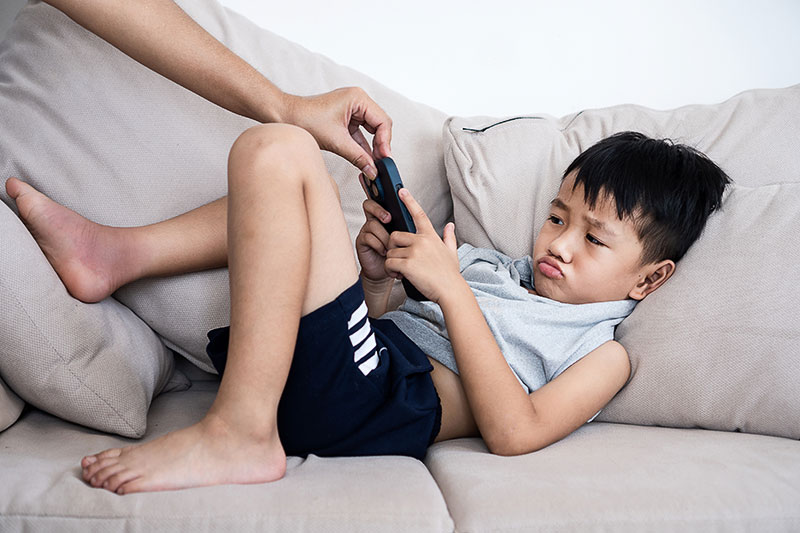
From the classroom to the bedroom to the back seat of the car, kids spend much of their waking hours looking at screens. But what kind of impact does all that screen time have?
According to a 2025 study by the Centers for Disease Control and Prevention, teenagers with higher non-schoolwork screen use were more likely to experience a series of adverse health outcomes—including infrequent physical activity, infrequent strength training, being infrequently well rested, having an irregular sleep routine, weight concerns, depression symptoms, anxiety symptoms, infrequent social and emotional support, and insufficient peer support.
In other words, these devices that once seemed to offer the harmless promise of convenient education and entertainment are, in many cases, leading to something much more troubling.
That’s why debates around screen time for kids are heating up. And it’s why Elle O’Brien, a psychiatric mental health nurse practitioner and owner of Mind-Body Pediatric Psychiatry in Naperville, believes now is the time for parents to determine where they stand on screen time and what makes sense for their families—before it starts having a negative impact on their kids’ mental health.
WARNING SIGNS
O’Brien says in teens, high levels of screen time can lead to increased anxiety and depression, which is why she encourages parents to look for signs of tearfulness, irritability, or self-isolation. Younger kids, meanwhile, may experience behavioral dysregulation in connection with too much screen time, such as yelling, throwing things, or hitting. They also may become more irritable, hyperactive, or aggressive. “I encourage parents to look for a change in their child’s mood and behavior around screen time,” she says.
She also thinks parents should pay attention to the opportunity cost of their kids’ screen time. “What would your child be doing if they weren’t on a screen?” she asks. “Are they losing valuable sleep? Or missing out on physical activity or in-person socialization?”
Finally, it’s important to note that not every child is affected by screens in the same way. O’Brien says kids with ADHD, for example, are more likely to experience behavioral dysregulation with screen time, and kids with anxiety or depression are more likely to see their symptoms worsen.
RECOMMENDATIONS
“In my practice, I see firsthand how significantly screen time impacts kids,” O’Brien says. “That’s why, in general, I believe the less screen time, the better. Parents should be intentional about their kids’ use, selecting high-quality, educational programming and avoiding overstimulating, fast-paced, or fantastical content.”
Noting that small changes can make a big difference—pointing to a 2025 study in JAMA that found just one week of reduced social-media use led to a 25 percent decrease in depression symptoms, 16 percent less anxiety, and significantly better sleep for kids—O’Brien’s conservative recommendation calls for no more than 30 minutes of recreational screen time on school days and up to two hours on weekends.
“Many kids are already using an electronic device for several hours during the school day, and their brains need a break,” she notes. “After-school time should be spent decompressing through sports or clubs, time outside, playing a board game, or spending time with family. This is especially true in the hour before bed, where screen exposure can cause significant disruption in sleep onset and overall sleep quality.”
Setting Boundaries
Ideally screen time discussions between kids and parents should happen in a collaborative way, says Elle O’Brien of Mind-Body Pediatric Psychiatry in Naperville. She has a few ideas to help things go more smoothly:
• Set a few simple ground rules to start. O’Brien recommends leaning into physical boundaries, such as no phones in the bedroom overnight and no screens at the table.
• Create a screen time agreement. Kids and teens are more likely to follow guidelines when they have a sense of agency. “Explore your child’s thoughts about the benefits and downsides of screen time, then gauge their ideas on a reasonable time limit and go from there,” she says. “They might surprise you.”
• Practice what you preach. “If you want your child to put their phone away during family time, model that behavior yourself,” O’Brien advises.
Photo: iStock
