


20 Cool Things
By Naperville Magazine
December 2025 View more Featured
By Lisa Arnett, Jeff Banowetz, and Jen Banowetz
Notable community news to brighten year’s end
1. Towering Achievement
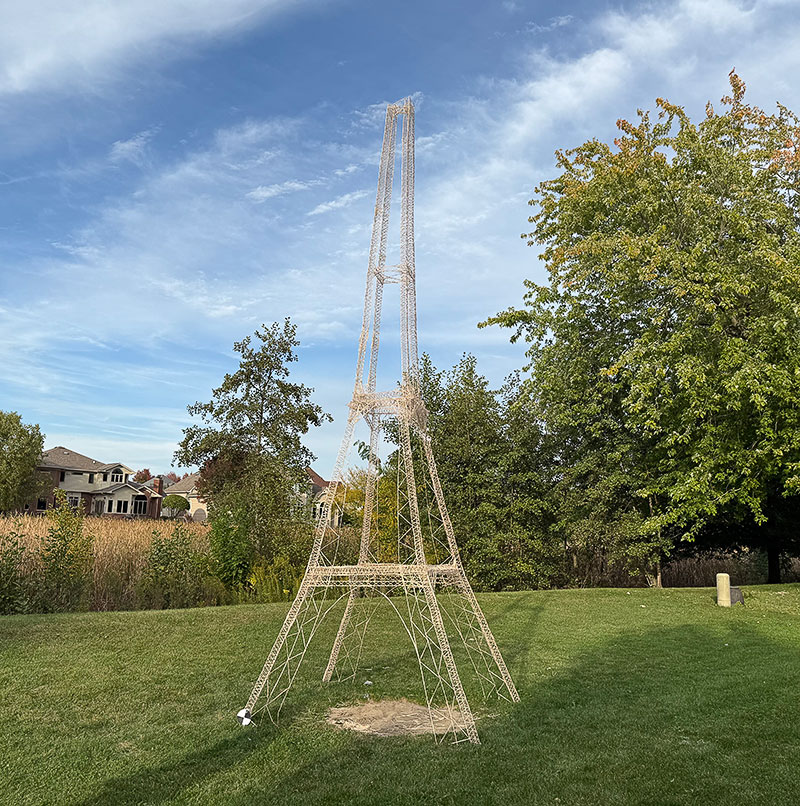
In case you were wondering, it takes 20,000 toothpicks and 400 glue sticks to break a Guinness World Record. That’s what 17-year-old Eric Klabel used to build his 17.32-foot-tall Eiffel Tower (now in the certification process). “I love to build because, with it, I get to turn a pile of insignificant material into something meaningful and special,” Klabel says. The whole project took about 200 hours over a year, including planning and building.

But at this point, he’s a pro at world records. “When I was around 12, I decided to break the world record for the tallest Popsicle stick tower, and it was such a great feeling,” he says. “I felt so proud of myself for completing something so worldly that I just had to do it again. So, last year when I was 16, I decided to try for another one.”
Any tips for people wanting to break a record?
“My best advice is focusing on tiny goals,” he says. Records seem daunting at first, but once you split them into tinier records it becomes easier. I didn’t think of my tower as 17 feet initially. I thought first that I just need to make a one-foot section first, and I’ll worry about the rest later.”
2. Shelf Life
Food insecurity continues to intensify in DuPage County. You can help neighbors facing hunger through West Suburban Community Pantry’s “Sponsor a Shelf” program this holiday season. A donation of $1,100 helps stock a shelf with cereal, $1,600 provides pasta, and $2,300 fills a cooler with eggs for one month. For more info, visit wscpantry.org.
3. How to Train Your Dragonfly
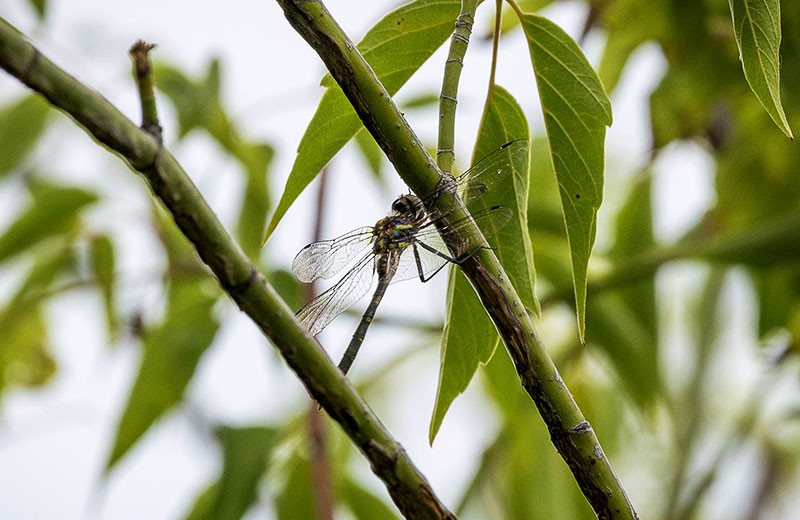
Meet the Hine’s emerald dragonfly, a DuPage native.
“Hine’s in particular are special because they’re so rare,” says Andres Ortega aquatic resources supervisor for the Forest Preserve District of DuPage County. “They are the only federally endangered dragonfly species in our country, they exist only in four states—Illinois, Wisconsin, Michigan, and Missouri—and are habitat specialists that can only exist in a very specific type of habitat.”
They’re also unique in how long-lived they are. “Many dragonflies in our area can develop from egg to adult in 3 to 9 months, whereas HED require about 4 to 5 years of growth as aquatic larvae before they become flying, breeding adults,” Ortega explains. “This is an incredibly long life cycle for a dragonfly. Being a rare species that’s been brought to the brink of extinction in Illinois due to human impacts, it’s our role to step in and do what we can to save this species in DuPage County.”
To help, the Urban Stream Research Center in Warrenville has been fostering these dragonflies since 2016. “Our goal is to take some of these animals out of the wild as eggs, raise them in captivity with the best chance of survivorship, much more than they experience in the wild, and then to release them as breeding adults to augment the local populations,” he says. It’s a complicated process that can take two to three years. Raising crayfish was added to the project in 2018. “One of the habitat characteristics the HED depend on is the presence of crayfish burrows, specifically Great Plains mudbugs,” he says. More crayfish burrows can support more dragonflies.
All the work is paying off. This year, 32 dragonflies and 168 mudbugs were released. “Keep in mind, the entire state population of HED in Illinois is thought to average around 300 adults per year, so a release of 32 represents over 10 percent of the entire annual population in Illinois.”
4. Intergenerational Programs at Naper Settlement
This year Naper Settlement received a $500,000 state grant to create four programs targeted across generations at the downtown museum. Golden Days Senior Programs, Camp New Horizons, the Regional Institute for Teacher Education, and Field Trip Connect will start in 2026. Golden Days will help Naper Settlement create a social hub for senior citizens with “intergenerational storytelling, wellness activities, discussion-based events, and community partnerships.”
The other programs will be part of the Science, Technology, Engineering, Humanities, and Mathematics hub, which will offer opportunities for students and provide professional development for teachers. “The more than 30,000 schoolchildren from across the state who visit Naper Settlement every year will benefit from expanded programming and interaction with seniors and others in the community,” says Naper Settlement president and CEO Rena Tamayo-Calabrese.
5. Sustainable Fashion for Everyone
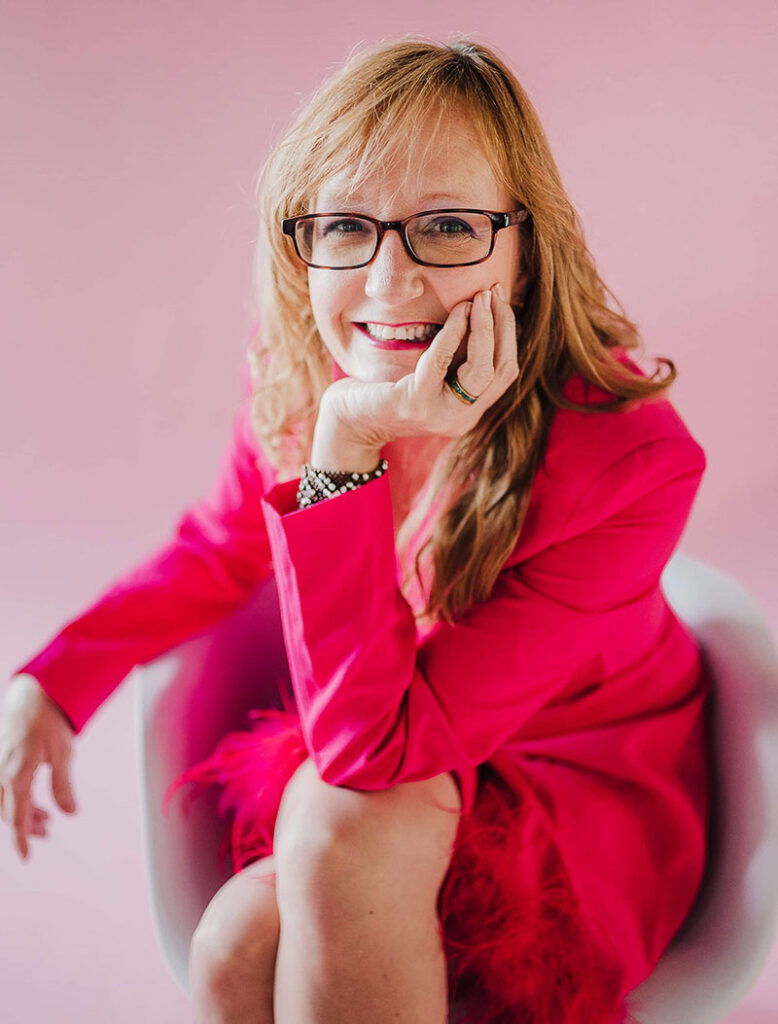
Paula Mueller, owner of Paula’s Couture Consignment in downtown Batavia, is a bright beacon for fabulous and fearless dressing in middle age. A scroll through her Instagram may show her sporting a zebra-print minidress and faux-fur platform sandals or a flashy emerald satin ensemble. Since 2018, Mueller has promoted sustainable fashion by selling secondhand clothing at her upscale consignment boutique at 4½ W. Wilson St. in Batavia. “There’s two rules here: The clothes don’t have an age—they don’t tell you, ‘Oh, you’re too old for that!’—and the sizes don’t matter,” she explains. In the past year, though, Mueller has used her social media platform for more than just fashion—advocating for equal rights for LGBTQ+ people. “It was a very conscious choice after this [presidential] election,” she says. “I have transgender family members, and I’m concerned for their safety and well-being. So I wanted to try and speak loudly and speak boldly for them so they would know there are people out here fighting for them.” In November, Mueller added a nonbinary clothing section to her store. “I feel like it’s a real need and I like being a space where everybody can find something to feel good in,” she says.
6. Choose Your Charity
Charitable vending machines are returning to the Fox Valley Mall Dec. 17 to 31 (near southeast entrance door 2). Instead of soda or chips, shoppers can select from a variety of local charities in the giving machines to make a donation—Little Friends, Loaves & Fishes, Ronald McDonald House, and more. “My favorite part about this program is seeing people approach the machines, especially kids, for the first time—I get to see their faces light up as they see the 30 charitable item choices,” says April Foreman of Giving Machines Chicagoland, a program of the Church of Jesus Christ of Latter-day Saints. “I watch them smile as they pick an item that helps another individual but speaks to them. This initiative allows our charitable partners to help end recipients, but it also lets the giver experience the joy of helping another individual. The giving machine initiative helps people on both sides of the glass.”
The 2024 Chicagoland Light the World Giving Machines made nearly $85,000 that directly helped more than 45,500 individuals, she says.
7. Honoring Military Service
For the veterans in your life, this holiday season consider giving a membership in American Legion Post 43 Naperville. “We offer [benefits] to local veterans, such as access to valuable resources, camaraderie, and a chance to continue serving their community,” says the post’s commander, Tom Jorstad. “Whether you’re a veteran yourself or want to honor someone who served, membership in American Legion Post 43 is a meaningful way to stay connected and give back.”
Each year the post awards $12,000 in scholarships to local high school seniors; provides $3,000 in educational support for veterans attending local colleges; sponsors local scout troops, youth baseball teams, and other programs; and hosts community engagement events. For more information, visit naperlegion.org or call 630-904-0602.
8. A Sesquicentennial Milestone

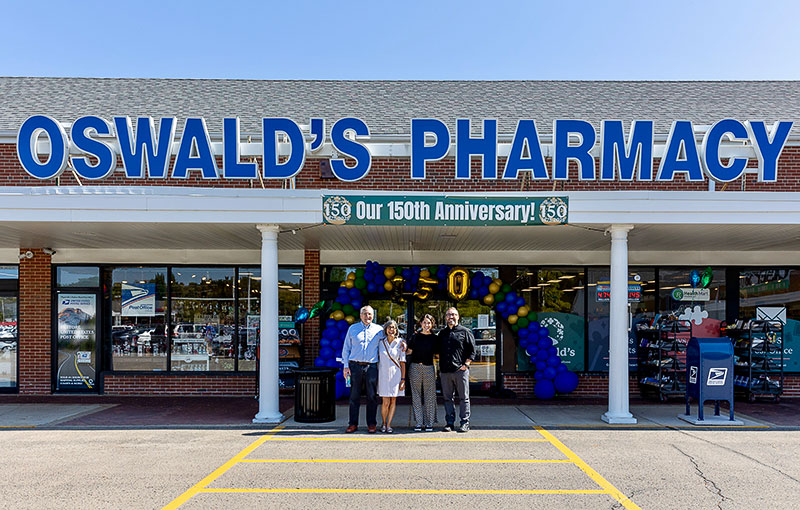
A beloved Naperville destination for everything from prescriptions to puzzles to Powerball tickets, Oswald’s Pharmacy (88 W. Gartner Road) celebrated its 150th anniversary of business this year. As a nod to the soda fountain that operated in its original location at 39 W. Jefferson St., the pharmacy released a commemorative line of craft sodas—think root beer, orange cream soda, and raspberry lime rickey—available through the year’s end. “I’ve always been fascinated by the soda fountain part of the business because it was my great-grandpa who got rid of it in 1961 to make way for cosmetics,” says Alex Anderson, the pharmacy’s sixth-generation owner. “Every generation of the pharmacy changed something to keep it moving forward. Maybe if we kept that soda fountain we would have closed like so many others over the years.”

9. And Another Sesquicentennial Milestone
With roots intertwined with Oswald’s Pharmacy, Anderson’s Bookshop (123 W. Jefferson Ave.) also celebrated its 150th anniversary this year. Current owner Becky Anderson’s great-great-grandfather sold books at his drugstore (then called W.W. Wickel) on Jefferson Street in the 1870s, which evolved into the standalone bookselling business that is now Anderson’s. The store also has a second location in Downers Grove (5112 Main St.) that opened in 1980. “It’s an incredible thing to be able to say that Anderson’s is actually the oldest single family-run bookstore in the country,” says Ginny Wehrli-Hemmeter, director of events and marketing. “Books and literature and culture are really what keep us going, and that’s a constant through when things are good and things are not good. Our business has survived two pandemics, e-commerce, big-box chains that have come and gone…and [this anniversary] is such a fun milestone to share with the community.”
Earlier this fall, the shop also celebrated Banned Books Week (Oct. 5 to 11) by hosting its first-ever Banned Books Read-In. Customers were invited to read or listen to banned books in front of or inside the store, or in a coveted spot in the front window.

10. New Skatepark Art
The Rothermel Family Skate Facility in Naperville now sports four vibrant murals thanks to a partnership between nonprofit Max’s Mission and the Naperville Park District. Naperville resident Jill Wijangco founded Max’s Mission with husband Ray after their son, Max, an avid skateboarder, died by suicide in 2022. The mural installation is one of the nonprofit’s initiatives, which include a suicide loss support group and the social media project Say Their Name. “Suicide loss survivors are one of the highest risk groups out there for taking our own lives as well—the closer the person is to you who you lose, the higher the risk is you might do the same thing,” Wijangco says. “We serve the survivor; that is our mission. Everything we do is to help suicide loss survivors lead their best possible lives and not take their own lives.” To fund the project, Max’s Mission secured grants from Naperville Township Mental Health Board, City of Naperville SECA Grant Fund, and the DuPage Foundation. MM Peters Construction installed the concrete walls, and artist Peter Thaddeus painted the series of four murals, titled Afterglow. The name comes from the moment after sunset when the sky remains colorfully ablaze. “People we have lost to suicide, they are physically gone, but their spirit and their legacy and their light can live on if we continue to say their name,” Wijangco says. “These murals are so bright and colorful, and they can mean so many different things to so many different people.” One mural features the numbers “988,” standing for the 988 Suicide & Crisis Lifeline, as well as a semicolon. “That’s a sign of ‘pause, don’t stop’—give it a couple minutes. So many suicides are impulsive,” Wijangco says, adding that about 150 people attended a ribbon-cutting ceremony for the murals. “This is not a memorial to Max; this is for everyone.”
11. Learning Through Play
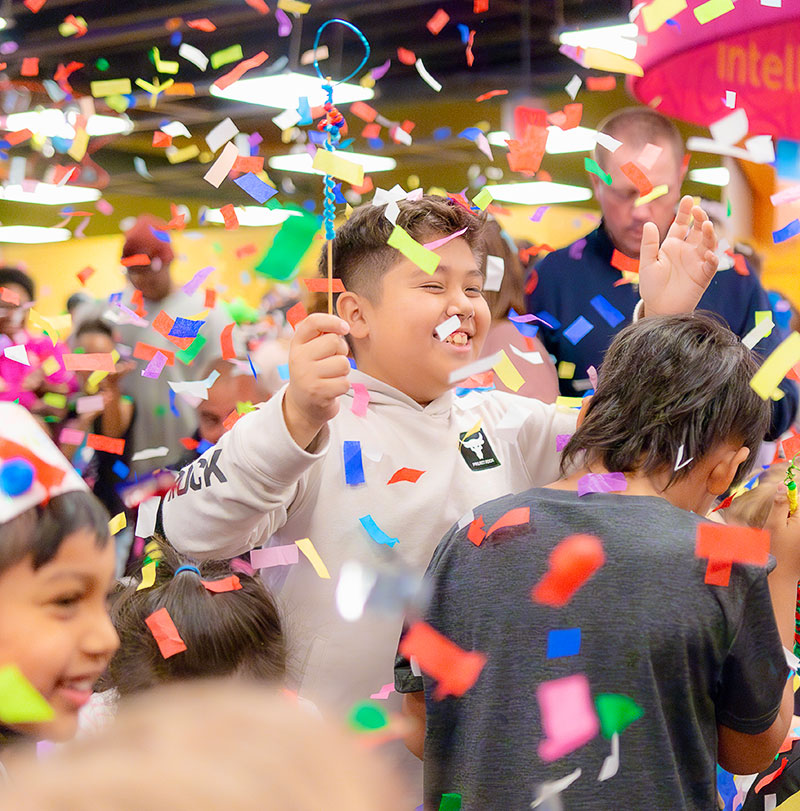
Most locals think of the DuPage Children’s Museum (301 N. Washington St.) for its hands-on exhibits, but the staff is also hard at work off the museum floor with community playgroups and afterschool programs, such as the Bloom Together Playgroup. “It’s all about practices like reading and discussing stories, and ‘talk, sing, and point,’ or ‘count, group, and compare,’ ” says Kimberly Stull, the museum’s executive vice president of joyful learning. “It’s all of these wonderful, simple things that all parents do naturally and it’s a good thing to remind parents how important they are for early learning.”
The museum’s beloved Bubble Bash also will return for New Year’s Eve (9 a.m. to 1 p.m. Dec. 31), and the staff is hard at work winterizing its exhibits for frosty fun from Dec. 20 to Jan. 4. “We will have indoor snowballs, we will have icebergs that can be floated in the water table,” Stull says. “The highlight that we are super-excited about is a sock skating rink.”
12. Focusing on Climate Solutions
The mission of Accelerate Climate Solutions is pretty straightforward: to identify and implement local solutions to climate issues. Getting the next generation involved is key—the Naperville nonprofit’s BLAST (Building Leadership Around Sustainable Transformation) program offers young people opportunities to solve problems they see in their own communities.
“We’ve had a student write a bill to teach about climate change in Illinois, another created seed libraries for sharing native prairie seeds, several helped with the creation of the first Chicago Youth Climate Justice Summit, and one team is working on measuring air quality in Naperville,” says Executive Director Cathy Clarkin. “The range of interests and local solutions the students have come up with is incredible.”
There are several ways to get involved. Students can volunteer with the group’s Climate Action team. Its summer program offers paid and unpaid internships for both college and high school students, giving students a wide range of experiences, everything from civic engagement to project planning. And applications for the BLAST Competition are now open. “Students throughout the region submit ideas for projects and get assigned adult mentors to help them develop a business-style, project pitch,” Clarkin says. “Winners receive a $1,000 prize that they can use to further develop their projects or put toward their education. We will also continue to support select BLAST projects next summer, ensuring that student-led projects move from idea to implementation.”
The teens have really been inspiring.
“Honestly, all the adults who participate in our events have their socks knocked off by these students,” Clarkin says. “Seeing people’s reaction to students’ work is always a great moment. Our students have fantastic ideas for innovations that can improve our world.”
13. Creating Future Philanthropists
The Community Foundation of the Fox River Valley understands that young people may have great ideas for improving their community but are unlikely to have the funds to carry them out. Its Youth Engagement in Philanthropy Program helps high school students learn about fundraising, grant making, and community service, and provides funds to help those ideas come to fruition. Participants in the program meet once a month and participate in other service programs throughout the area. As a group, the YEP members decide how to allocate $25,000 in spending to local nonprofits to “create the greatest impact for youth-related causes in the Fox Valley Area.”

14. A Coffeeshop Collaboration
When Geneva coffeehouse Graham’s 318 closed in 2024, locals lamented the loss of an indie coffee shop in the downtown district. This past summer, two west suburban businesses—Five & Hoek Coffee Co. and Bien Trucha Group—teamed up to fill the gap with Viva Café, a pop-up coffee and pastry shop at 416 W. State St.
Tyler Fivecoat, who owns Five & Hoek with wife Beth and friend Erich Goepel, admits they had zero interest in expanding beyond their original Wheaton location and second café in Knoxville, Tennessee. That is, until Bien Trucha Group partner Rodrigo Cano—a longtime customer at the Wheaton café—reached out to Fivecoat to see if they were interested in opening a coffee shop in the vacant storefront next door to Bien Trucha. “Rodrigo’s restaurants are bar none the best out there…so when he said they wanted to partner with us, we couldn’t say no,” Fivecoat says. They agreed Cano’s team would provide pastries and breakfast burritos, Fivecoat’s staff would handle the coffee, and the whole thing would be on a trial basis. It didn’t take long before Genevans lined up for the iced horchata lattes and guava empanadas, so they recently announced that Viva Café would become a permanent location of Five & Hoek.
15. Making the List
Each year the business magazine Inc. releases the Inc. 5000, a list of the fastest-growing private companies in the country. This year, five Naperville companies made the cut, and the fastest-growing of those (based on revenue from 2021 to 2024) is Grow Wellness Group, which has seen a 247 percent growth in revenue over the last three years. According to Adam Ratner, who founded the company in 2019 with Wendy Hayum-Gross, Grow Wellness Group is “a full-service provider of mental wellness services to children, teens, adults, families, couples, parents, blended families, and athletes.” It offers a wide range of services, ranging from mental health counseling to sports psychology.
“We are delighted to make this list, and it has nothing to do with financial performance or revenue or profitability,” Ratner says. “Being recognized as the top Naperville company on the list is truly a testament to the amazing work of our team, leadership, community partners, and the deep impact we are all making on the lives of those in the community we care so deeply about.”
Other Naperville companies to make the Inc. 5000 list are AiRo Digital Labs (an IT services company with 206 percent growth); Tapville (a self-pour tap restaurant/hospitality group with 135 percent growth); Impact Advisors (a health care consulting firm with 135 percent growth); and GET Logistics (a transportation company with 80 percent growth).

16. Adaptive Swim Lessons
Rachael Roth, owner of the Big Blue Swim School (1265 S. Naper Blvd.) in Naperville, takes pride in the fact that so many people are able to learn to swim through its programs. But she noticed last year that for some children, the typical lessons weren’t producing the same results. “We would have kids come in who just needed a different approach and a different level of teaching,” she says. After some research, she discovered the Swim Angelfish teaching method, which helps train instructors to better help children with physical, cognitive, and sensory needs. After putting her swim instructors through the training, she’s now able to offer adaptive swimming lessons through the Big Blue Swim School that teach both water-safety skills and nurture “confidence, independence and joy in the water.”
The lessons “help them build confidence and overcome challenges,” she says. The swim school recently has partnered with the Turning Pointe Autism Foundation to help reach more children in this community. Children with autism are more likely to drown than neurotypical children, according to figures provided by the American Red Cross. “These lessons are a powerful way to support not only individual growth but a stronger, safer community,” Roth says. “We’re proud to partner with organizations like Turning Pointe Autism Foundation, whose work aligns so closely with our commitment to inclusion and unlocking every child’s potential.”
17. A Decade Helping Youth
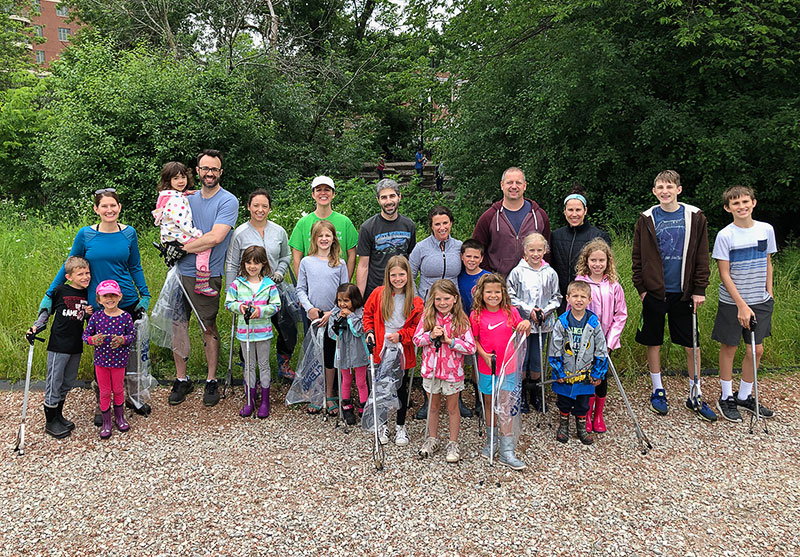
This year, the nonprofit Inside Out Club celebrated the 10th anniversary of launching its first after-school program at Elmwood Elementary School. Founder Marion Ruthig created the organization to both inspire kids to do good works and equip them with the necessary life skills they need to succeed. The Inside Out Club now works with kids from kindergarten through high school, offering programs that help kids grow from the inside out. The organization focuses on providing grade-appropriate lessons outside the academic realm. The K-5 programs focus on teaching character, belonging, and how to positively impact others. For middle schoolers, the Business Designers 4 Good program teaches participants to design and present their own socially responsible business, highlighting skills in entrepreneurship, emotional intelligence, and leadership. For high schoolers, the SkillsBox10 teaches life skills necessary beyond high school, such as how to communicate in person more effectively.
“There are still some ripple effects from the pandemic, and a lot of kids really do struggle with [communication],” Ruthig says. “If you can put them in a fun situation and get them a little outside of their comfort zone, they really can make some big improvements.” High schoolers are taught how to have professional phone conversations, make eye contact, and develop other soft skills necessary to thrive in college or in a job after graduation.
In addition to after-school programs, the Inside Out Club offers summer camps, group classes for organizations, volunteer opportunities, and online resources. “We really focus on these core character skills, the soft skills, that just will help as they grow and hopefully we’ll be with them forever,” Ruthig says. “We want to help them thrive.”
18. Awarding Youth Service
Since 2001, the nonprofit KidsMatter has been working with area children to help them develop “positive values, healthy relationships and self-esteem.” It’s known for its free events and programs that equip kids to manage the social pressures of everyday life and develop skills that help them beyond the classroom. Part of those programs focuses on service, and this year, the Naperville City Council honored 22 students with the 2025 Youth Service Award for their efforts to improve the community. The students, awarded at the Oct. 16 City Council Meeting, were recognized for their work with 15 different nonprofits. “It’s always inspiring to see our community’s young people giving back to causes that matter to them—supporting local organizations in their vital work and learning what it means to help others,” says Nina Menis, CEO and executive director of KidsMatter.
The Youth Service Award was established in 1993, honoring Naperville-area students “for outstanding community service.” KidsMatter joined the City of Naperville in championing this awards program in 2005. Youth Service Award recipients have collectively logged more than 50,000 volunteer hours at more than 50 local nonprofit organizations since its inception.

19. 50 Years of Growing
The Cress Creek Garden Club of Naperville celebrated its 50th anniversary on Oct. 10—exactly 50 years from the club’s first meeting on Oct. 10, 1975.
There’s been a lot of planting in that half-century.
For example, the club has managed the Paw Paw Garden at Naper Settlement for 45 years. Veterans Park, the Blue Star Marker garden at the Naperville VFW, the plantings at the DuPage Children’s Museum, and planting at Trinity House—all club projects. In addition to all the gardening and plant sales, the club hosts garden therapy at a local nursing home once a month, while its fall fundraiser provides funds for several scholarships to students planning to major in fields associated with horticulture, floral design, landscaping, conservation, and water restoration.
“I am so proud of all we do, and the best reward is the smiles and thanks from all of the organizations and individuals we help every year through our scholarships, our donations, our time planting gardens, time with nursing home residents, and community members we see on a daily basis through our numerous outreach activities,” says Sally Johnson, who’s been a member for three years. “We do want to thank all of the individuals and the many local businesses that give donations to further our mission.”
20. A New Bottle Shop, Minus the Booze
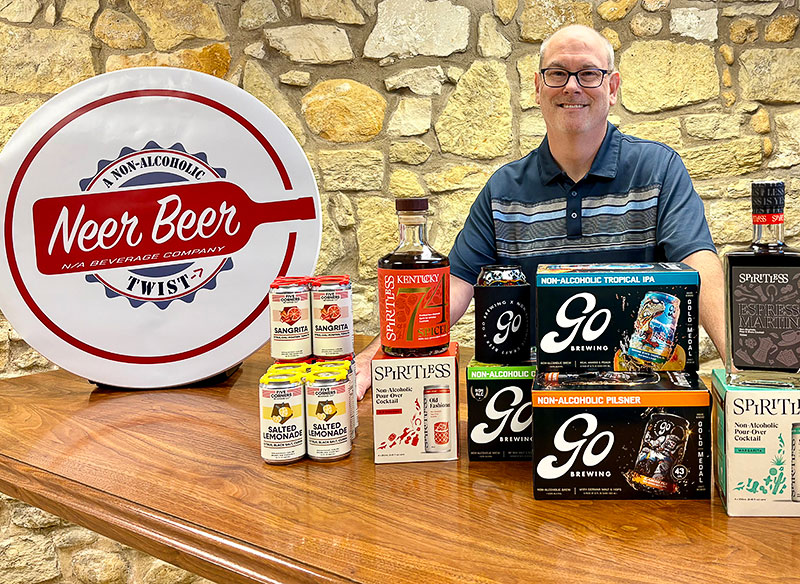
For a historically dry town, Wheaton is ironically lacking in nonalcoholic options. Jason Krapausky is setting out to change that with the debut of Neer Beer N/A Bottle Shop, slated to open before the year’s end at 117 W. Wesley St. in downtown Wheaton. “I came to a point in my life where I decided I really had enough of drinking, but I still loved the taste of beer,” says Krapausky, who has a background in retail operations, including 18 years in store leadership with Whole Foods. “I got into nonalcoholic beer and from there, kind of realized that the N/A world was really underrepresented in retail.” The store’s name is Krapausky’s twist on the term used to describe malt beverages with less than 0.5 percent alcohol during Prohibition. “If you talk to someone your grandfather’s age, if you say ‘near beer’ they will know exactly what that means,” he says. He plans to stock bottles and cans of non-alcoholic beer, wine, and ready-to-drink mocktails. “I’ll also have N/A beer on tap served in either recyclable or compostable containers to take home,” he says. Expect to see craft brews from Naperville-based Go Brewing as well as zero-proof options from Austin, Texas–based company Spiritless and Chicago-based Five Corners Beverage Co., which makes a canned lemonade with black salt and cumin flavors. The 1,400-square-foot store will feature a social room where customers can crack open a purchase from the cooler and hang out at a high-top table. “It will be available to rent for people looking for a dedicated space where they can feel comfortable drinking N/A without the pressures of a typical bar,” he says.
Photos: Eric Klabel (toothpick tower); Forest Preserve District of DuPage County (Hine’s emerald dragonfly); April Duda Photography (Paula Mueller); Oswald’s Pharmancy; Anderson’s Bookshop; Max’s Mission; DuPage Children’s Museum; Axiom Media Group (Viva Café); Big Blue Swim School Naperville; Inside Out Club; Cress Creek Garden Club; Neer Beer
