




Improving How We Treat Autism
By Naperville Magazine
Appears in the September 2025 issue.
By Jeff Banowetz
The Emergent Learning Centers recently opened its national headquarters in Naperville
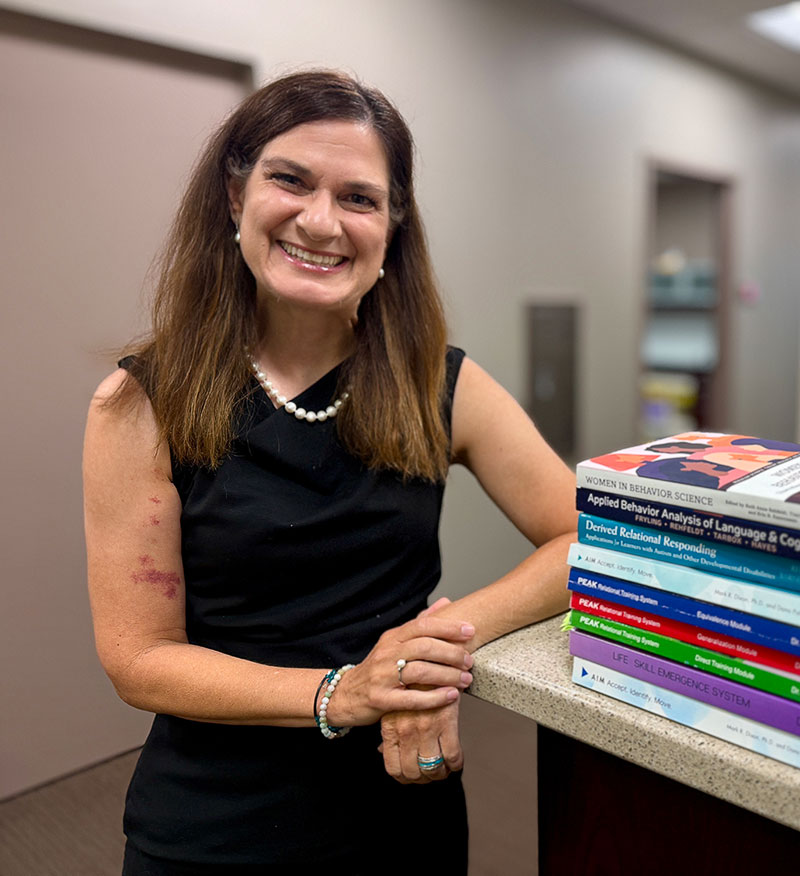
RuthAnne Rehfeldt, a doctor and former university professor, has spent her career studying the best ways to help children with autism. She and her husband, Mark Dixon, also a doctor and educator, are leaders in the field of Applied Behavior Analysis, or ABA, which uses techniques designed to “address specific behaviors and promote positive changes in children” with autism. The couple founded the Emergent Learning Centers about 15 years ago, with 10 locations around the country. And while she and her husband have held faculty positions at multiple universities across the country, they recently chose Naperville to serve as the center’s national headquarters and newest outpost.
“We lived in Naperville for a short period of time between receiving our PhDs and prior to relocating to Carbondale, where we both served on the faculty at Southern Illinois University,” Rehfeldt says. “With teenage daughters, we thought it was a good time to establish our main hub here in downtown Naperville. That’s sort of a long-winded way of saying that we have always wanted to come back and bring our family back to this area.”
The center, located at 29 S. Webster St., provides a range of interventions using the principles of ABA. Designed to be an engaging and supportive environment for children and teens, the clinic offers evaluations and tailored treatment plans. “ABA is the only evidence-based treatment for autism spectrum disorder,” Rehfeldt says. “It basically involves arranging highly structured teaching conditions to promote language and cognitive development.”
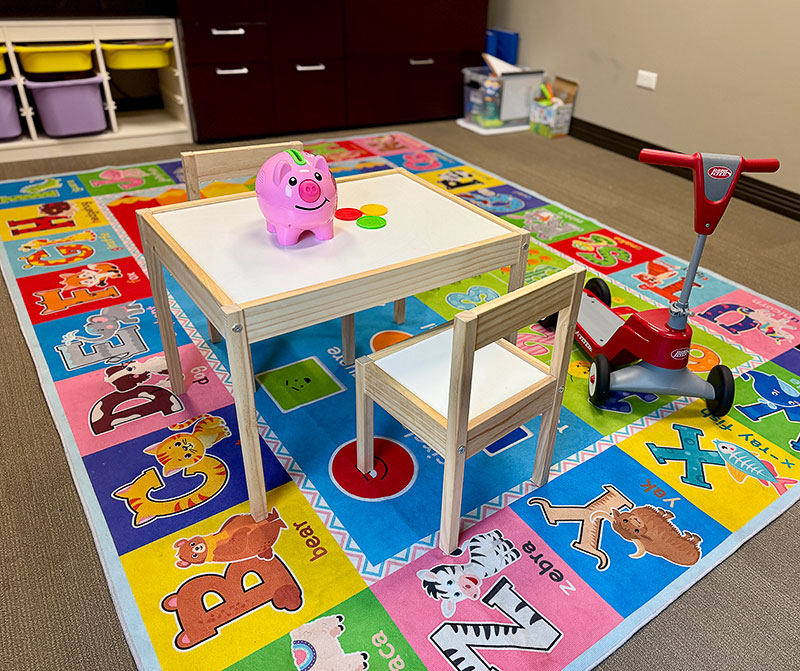
The goal is to help individuals develop more sophisticated language and communication skills as well as build their social and peer-to-peer interaction skills. “What’s a little bit different about our approach is we have an evidence-based curriculum that we’ve established through our research conducted with students over the years,” Rehfeldt says. “We try to teach individuals how to learn skills versus what to learn, which I think makes us a little bit different from other ABA facilities.”
ABA has been documented by the U.S. surgeon general, the American Academy of Pediatrics, the Centers for Disease Control and Prevention, and the National Autism Center as the top evidence-based practice for the effective treatment of autism.
While the prevalence of autism continues to rise across the country, Rehfeldt says that she’s most encouraged by the successes in working with children with autism to improve their language and communication skills.
“Social interaction is a core deficiency of autism,” she says. “The prevalence of loneliness and lack of friendships reported by teens and young adults with autiism is pretty startling. One thing I’m proud of at our centers is that although we do work with a lot of young learners in teaching rudimentary language and communication and cognitive skills, we also do some work in groups where we focus on relationship-building and friendship-making. [We teach] how to form shared interests and shared leisure hobbies with other individuals so social relationships can start to flourish. That can make a big difference.”
Photos: Jen Banowetz
