


Nancy Goodfellow
By Naperville Magazine
June 2026 View more Spotlight
By Jeff Banowetz
This Naperville author’s advocacy for special needs children helped influence her first book
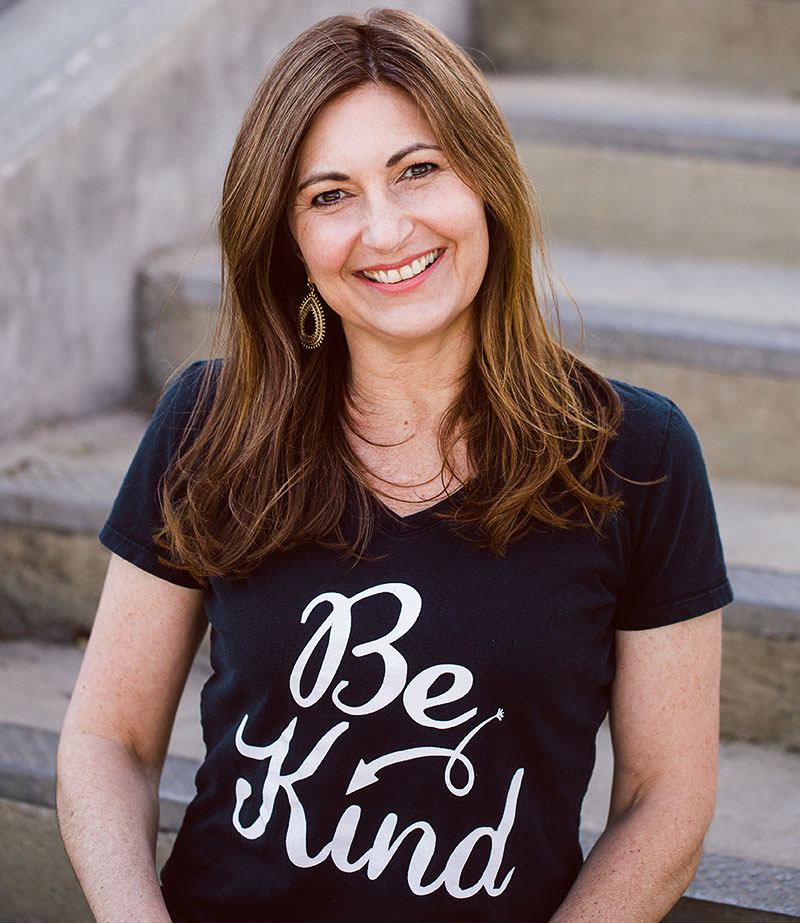
As Nancy Goodfellow puts it, she always wanted to be a writer, but “I just didn’t know what to write about.”
An English major in college, she eventually became a rare books dealer. But when her daughter, Lily, was born with Down syndrome, Lily quickly became the focus of her life. “We got a prenatal diagnosis halfway through my pregnancy, and I got very active in the Down syndrome community,” she says. “Within weeks of her being born, I was already working as a support parent for the National Association for Down Syndrome and trying to get as involved and educated as I possibly could.”
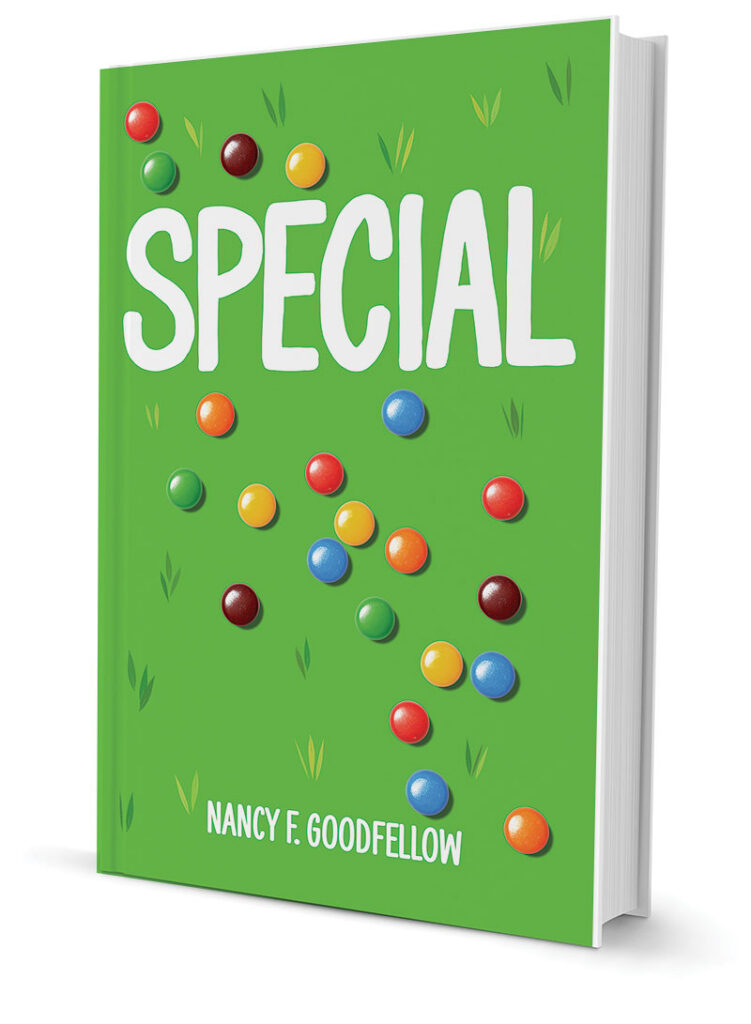
She started writing emails and newsletters for the organization and then began doing presentations at schools to help students better understand their classmates with disabilities (she’s spoken in front of more than 20,000 Illinois students over more than a decade.) Through her work and her daughter’s personal experience, she noted how friendships changed as children went through the school system, which she thought would be a great idea for a young-adult novel. The result is her first book, Special, which was published in February. The story about two best friends—one with Down syndrome and one without—highlights the challenges of friendship, belonging, and “being true to yourself,” she says.
Q: How did you first come up with the idea for this story?
A: I read a book about inclusion in schools that mentioned how young kids gravitate toward each other regardless of differences. When they start preschool and kindergarten, they’re just going to play with whoever wants to play the same thing they do. Along the way, the teachers inadvertently made them helpers. So by the time the kids were in like third or fourth grade, those who were really good with kids with disabilities would be the helper at gym or on field trips or things like that. So at a certain point, they stopped seeing it as just a friendship and started seeing it as a helper relationship—I’m just in charge of helping this person.
It became an idea in the back of my head, what if there was a story out there that talked about a relationship that got past that point, and a friendship that never changed because of the disability but changed at a point when friendships just change and face different challenges? The story had always stuck with me. But I got busy with three kids, so I put it on hold for a while.
Q: What brought you back to it?
A: My kids are all in school now, so I started to think it was time to just start writing it. I used to joke that the characters lived in my head for so long that I started having conversations with them. These girls deserved to get out of my head. When Lily started middle school, I felt like I could do it because my own daughter was at an age close to the age that I was writing about. That was important to me just because I wanted to make it as authentic, realistic, and honest as possible.
Q: What was the hardest part of telling this story?
A: I originally wrote it from Madison’s point of view, the child without a disability. I was talking to an editor, and he said, “What about the other character? Why aren’t we hearing from her point of view?” I thought it was really daunting to write from the perspective of a person with Down syndrome. I’m not sure I feel I can do that. And he replied, “If not you, who?”
That really hit me. I changed it to alternating between the first-person perspectives of both girls, and I think that made a huge difference. It was the most challenging part of the writing, but it made the book better.
Q: How does your daughter feel about the book?
A: It’s interesting, she loved the idea that her mom was writing a book, but then, when it was finished, she wasn’t all that interested in reading it. But then she joined a book club with five other young women with intellectual disabilities. They all read the book together, and I was so nervous. Was there anything in there that would make them sad or nervous? But they all loved it. Lily loves that she can see herself in it, even if the character definitely isn’t her. That made me feel a whole lot better, that they found it true to their experiences.
Photos: Nancy Goodfellow
