



Time Travel
By Naperville Magazine
May 2026 View more Featured
By Jeff Banowetz
Celebrate America’s 250th Birthday with these trips featuring ties to U.S. history and plenty of all-around fun
Philadelphia Freedom
Take a trip to the room where it happened
Philadelphia will get a lot of attention this year during the country’s 250th birthday celebration. It’s where, of course, the Declaration of Independence was written and signed in 1776. While a modern city has grown up around the colonial capital, its historic sites offer a taste of life in the late 18th century and showcase the achievements that led to America’s founding.
HISTORIC SITES
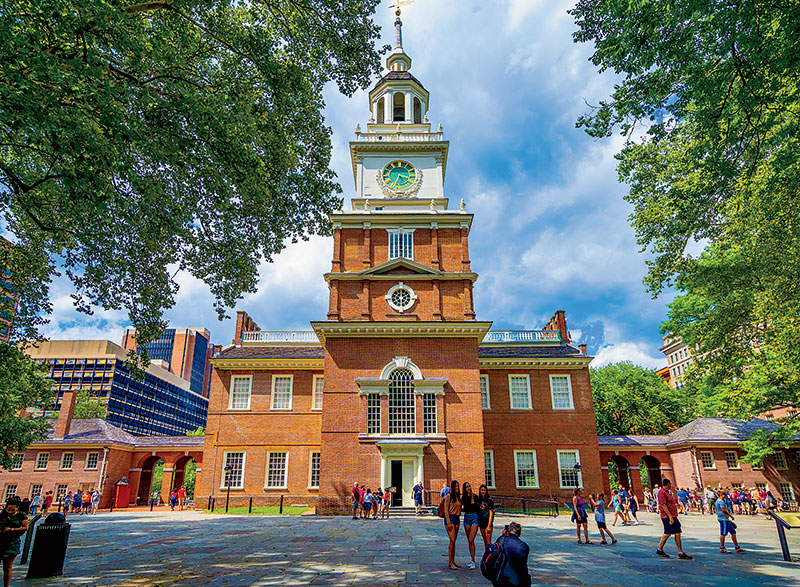
The must-do stop on any trip to the city is Independence Hall, a UNESCO World Heritage Site, where the Declaration of Independence was signed, and the U.S. Constitution was drafted and approved in 1787. The building was built in 1753 in the Georgian style popular at the time, and it retains most of its interior woodwork and exterior façade as it did when first built. It is now part of the Independence National Historical Park, a grouping of sites run by the National Park Service. Touring Independence Hall itself is easy—entry is $1, and free guided and self-guided tours are available daily from 9 a.m. to 5 p.m.
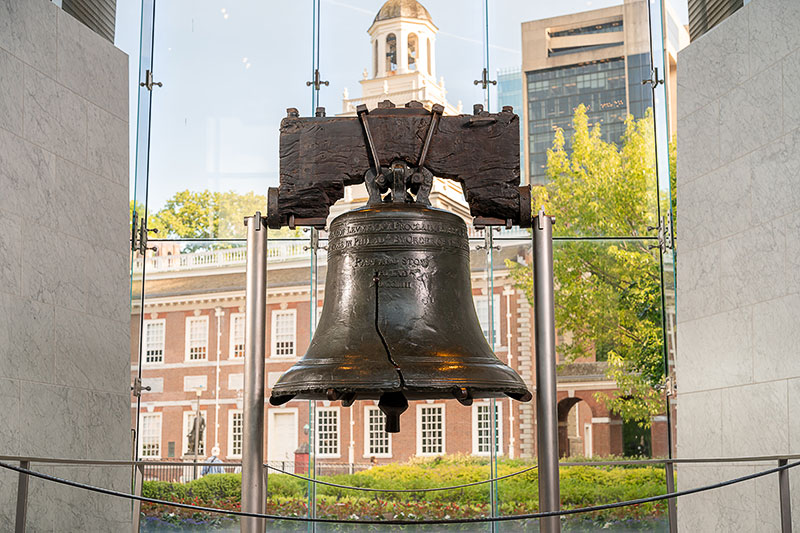
It’s probably best to start your visit to the park at the Independence Visitors Center (at Sixth and Market Streets), where you can buy tickets for tours and learn more about the other sites worth visiting. It’s attached to the Liberty Bell Center, which houses the famous cracked bell that’s become a symbol in the fight for equality throughout American history, including the abolitionist, women’s suffrage, and civil rights movements.
Congress Hall served as the home of the U.S. Congress from 1790 to 1800, when Philadelphia was the country’s capital. The President’s House shows the location where Presidents George Washington and John Adams lived during that time. While the historic house no longer exists, the home’s footprint has been turned into an open-air museum that commemorates the first executive mansion and offers a glimpse into the lives of both the leaders and the enslaved Africans who lived there.
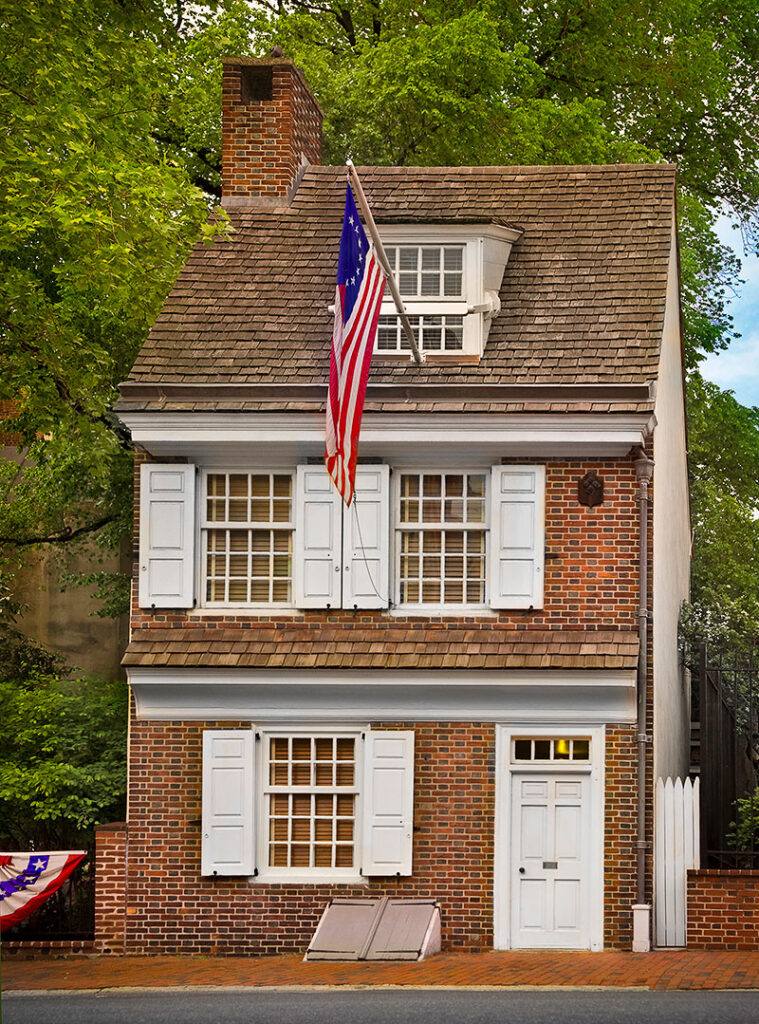
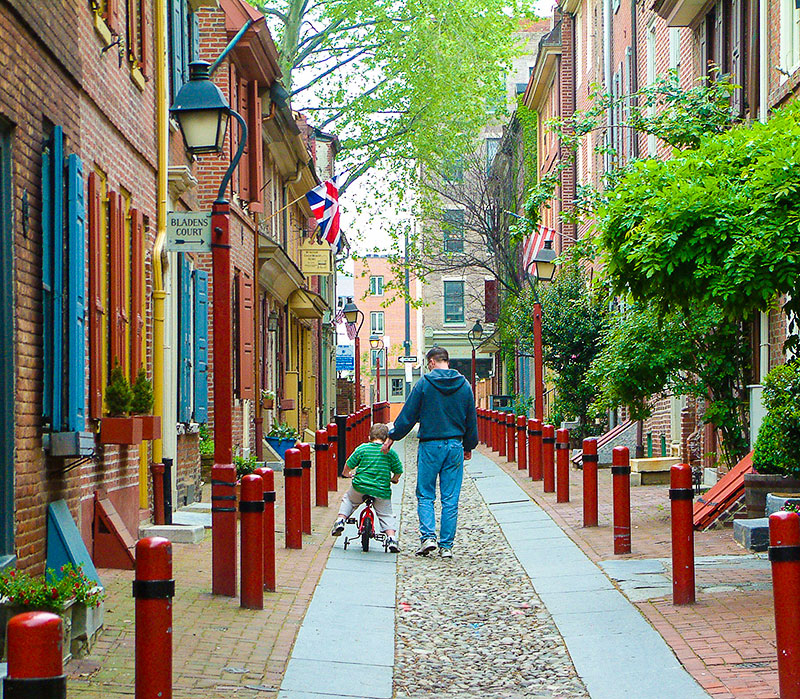
The National Constitution Center is a 160,000-square-foot museum dedicated to America’s foundational document, with high-tech exhibits and interactive displays. Visit the 350-seat Sidney Kimmel Theater there for a performance of Freedom Rising, which combines film, live actors, and video projections on a 360-degree screen to tell the story of the Constitution. Other historic sites worth a visit downtown include the Ben Franklin Museum, the Second Bank of the United States (with a collection of more than 150 portraits of 18th- and 19th-century political leaders, many by artist Charles Wilson Peale), and the Betsy Ross House. Stop by Elfreth’s Alley, one of the oldest continuously inhabited residential streets in the country, with buildings dating back to 1720.
If you have a car, it’s worth a drive to see Valley Forge, about 25 miles northwest of downtown, where the Continental Army was stationed during the brutal winter of 1777–78. Run by the National Park Service, the 3,500-acre property has beautiful walking and biking trails.
* * *
BEYOND HISTORY
This year, the City of Brotherly Love also will host World Cup soccer matches and the MLB All-Star Game. No trip to the city is complete without a run up the steps of the Philadelphia Museum of Art, just like Rocky. Be sure to explore inside as well, as it’s one of the largest art museums in the country. In celebration of the country’s birthday, the PMA is hosting “A Nation of Artists,” an exhibition showcasing the “history and evolution” of American art. Explore the exhibit hall designed by Frank Gehry, which opened in 2021.
For those with kids, the Franklin Institute is one of the country’s best science museums, with many hands-on exhibitions. The Philadelphia Zoo, chartered in 1859, is one of America’s first zoos. It now features more than 1,900 rare and endangered animals—and it’s still an innovator, with its Zoo360 creation, a first-of-its-kind system of “see-through trails passing through treetops, crossing over pathways and connecting habitats,” giving people a better view and animals more room to explore. For the younger set, Sesame Place in nearby Langhorne is a theme park based on the longtime PBS children’s program.
And don’t forget to grab a cheesesteak from either Pat’s or Geno’s—the rivals are across the street from each other on South Ninth Street.
Summer in Philadelphia means it’s time to head “down the shore.” Atlantic City, New Jersey, is only about 60 miles from downtown Philadelphia, for those who like to gamble, and you’ll find dozens of other vacation towns both north and south of AC if you want to mix in some beach time with your history.
* * *
HISTORIC STAY
If you really want to dive deep into Philadelphia’s past, stay at the Morris House Hotel, built in 1787; it’s an easy walk to many historic sites.
More info: visitphilly.com

Stepping into the Past
These living-history museums help visitors experience life in earlier eras
OLD WORLD WISCONSIN
Located in Eagle, just west of Milwaukee (and about a two-hour drive from Naperville), Old World Wisconsin offers a look back at the region, focusing on the period between 1840 and 1910. It sits amid 600 acres of woodlands, prairie, and wetlands near the Kettle Moraine State Forest and includes 60 restored homes, farms, stores and workshops.
The centerpiece of Old World Wisconsin is its Crossroads Village, a recreation of small-town America where you can explore shops, watch ironworkers, visit a 19th-century chapel, and tour homes filled with period-appropriate artifacts. You can even ride an early high-wheeled bicycle. Find out more about life on rural farms; explore the lodgings of early Finnish, Danish, and Norwegian immigrants; and put together the wagon wheels that helped people settle the state. At every exhibit, you’ll find reenactors in period dress to help you learn about the time and region.
This being Wisconsin, there’s an exhibit on the region’s brewing history, including a hands-on demonstration of the artisanal brewing process. Wittnebel’s Tavern, which dates back to the early 1900s, has been restored to take you back to the post-Prohibition era of the 1930s, with a 13.5-foot bar worn down by generations of use.
The Fourth of July is always a big event at Old World Wisconsin, but this year it plans additional activities to help celebrate the 250th. You’ll find old-time baseball games, musical performances, a pie-eating contest, and other entertainment from the era.
More info: oldworldwisconsin.wisconsinhistory.org
* * *
CONNER PRAIRIE
This living history museum in Fishers, Indiana, just north of Indianapolis, is centered around 19th-century life in central Indiana along the White River. It’s based at the William Conner home, a two-story Federal-style brick house built in 1823—but that’s only a small part of what this mostly open-air museum offers. Its 1836 Prairietown exhibit is an immersive experience that recreates a village from the era, complete with reenactors engaged in the trades and skills necessary to survive. Carpenters, blacksmiths, potters, and bakers are among the people hard at work. People are dressed for the period, and visitors are encouraged to ask questions to find out more about the gossip and news of the era. Children can play period-appropriate games and, when possible, help with chores.
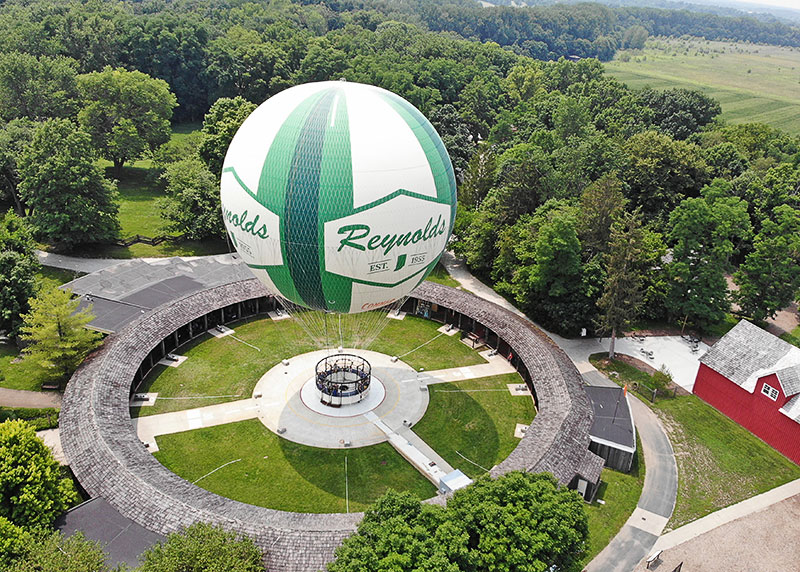
You’ll also be able to interact with farm animals, explore the four-story treehouse, hike nature trails, and even take a ride—weather permitting—in a hot-air balloon. The 1859 Balloon Voyage ride commemorates the event in Lafayette, Indiana, when 20,000 people gathered to watch the launch of a hot-air balloon that marked the first instance of air mail in the United States. Today, people can ride the tethered balloon 370 feet in the air.
In celebration of America’s 250th birthday, Conner Prairie will offer presentations on the country’s ongoing “struggle to fulfill the promises set forth in America’s founding documents.” It also continues its ongoing mission to focus on how everyday people shape the country.
More info: connerprairie.org
* * *
THE HENRY FORD
This four-museum campus in Deerfield, Michigan, about a five-hour drive from Naperville, offers a wide range of experiences and artifacts connected to American history. Car pioneer Henry Ford said of his work in assembling artifacts, “I am collecting the history of our people as written into things their hands made and used.”
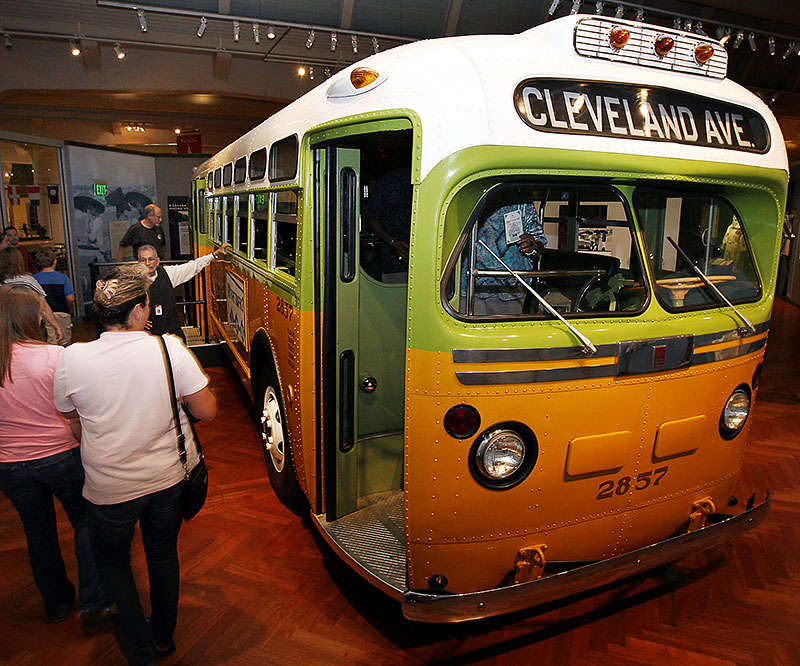
At Greenfield Village Museum, you’ll explore seven different areas that highlight how Americans lived and worked. Tour a working farm that uses techniques from hundreds of years ago and get demonstrations of skills like glassblowing, weaving, and pottery. You can ride a steam locomotive and explore the only operating railroad roundhouse in the Midwest. The Henry Ford Museum of American Innovation occupies more than 12 acres and is filled with items chronicling American culture and technology, with a big focus on transportation. You’ll find historic cars, locomotives, and aircraft, as well as pop-culture treasures. Some of the highlights include the “With Liberty and Justice for All” exhibit, which highlights four transformative movements toward American freedom: the Revolutionary Era, Anti-Slavery and the Civil War, the Women’s Suffrage, and Civil Rights. This is where the Rosa Parks bus is on display.
This year, the museum is running a program titled “America: 250 Years in the Making,” which will celebrate American innovation “powered by people and purpose.” It includes two special exhibitions this summer, “Handmade: The Crafting of America” and “Fabric of America: Our Fashions, Textiles, and Technologies.”
More info: thehenryford.org
* * *

COLONIAL WILLIAMSBURG
It’s a big year for living-history museum Colonial Williamsburg, which is celebrating its 100th anniversary (with a special exhibit), alongside the country’s 250th anniversary. It was founded to restore the city that was once the colonial Virginia capital. The capital was moved to Richmond, and Williamsburg was largely spared during the Civil War, leaving many colonial-era homes and properties intact. Of the 500 buildings restored or created over the last 100 years as part of the project, 88 are considered originals, turning the city into a 301-acre time capsule.
Stay at one of the historic properties on the grounds. Opened in 1937, the Williamsburg Inn was created by John D. Rockefeller Jr.; its colonial revival façade pays homage to America’s late 18th-century design aesthetics. Other places to spend the night include tavern houses and colonial homes that help keep you in the spirit of the Revolutionary era.
The American Revolution Museum at Yorktown, the site of the battle that ended the Revolutionary War, is also just a short drive away. As is the Jamestown Settlement, a museum near the site of the original American colony.
More info: colonialwilliamsburg.org
A Capital Vacation
Washington, D.C., offers plenty to enjoy even if you want to avoid politics
The nation’s capital is filled with ways to celebrate America’s birthday—even if it wasn’t around in 1776. In fact, the city was created in 1790, and Congress held its first session there in 1800. While there are certainly historic places and events to explore, Washington is perhaps best known for its museums and monuments that showcase the breadth of American history. From the overwhelming reach of the Smithsonian Museum to the marble memorials of national heroes, you can spend a week touring D.C. and not come close to seeing it all. America’s semiquincentennial is a great excuse to start exploring.
* * *

HISTORIC SITES
While the document was signed in Philadelphia, the Declaration of Independence resides in D.C., in the National Archives’ impressive Federal-style Rotunda, along with the Constitution and the Bill of Rights, collectively known as the Charters of Freedom. The National Archives are part of the National Mall and Memorial Parks, which are managed by the National Park Service and colloquially known as “America’s Front Yard.”
The mall stretches about 2.5 miles from the U.S. Capitol on the east side to the Lincoln Memorial on the west, and on it you’ll find the bulk of the buildings that make up the Smithsonian Institute, the world’s largest museum complex. It includes 12 museums on the mall and four just off the mall, within walking distance. Entry to all the museums is free, but you may need to obtain a free entry ticket in advance. It pays to plan ahead, as the museums can get crowded, and you may be denied entry without a ticket.
The most popular museums on the mall are the National Museum of Natural History, with 3.3 million visitors in 2025, the National Air and Space Museum (1.9 million), and the National Museum of American History (1.8 million). Other bustling spots on the mall are the African American History and Culture Museum, the Hirshhorn Museum (featuring modern and contemporary art), the Asian Art Museum, and the open-air Smithsonian Gardens.
Off the mall, you’ll find the American Art Museum and the Portrait Gallery. Most museums are hosting exhibitions or events to celebrate the country’s 250th birthday.
You can’t help but notice the 550-foot-tall Washington Monument, the marble obelisk in the middle of the mall. Tickets to enter the monument (cost: $1) need to be purchased in advance (up to 30 days before you visit).
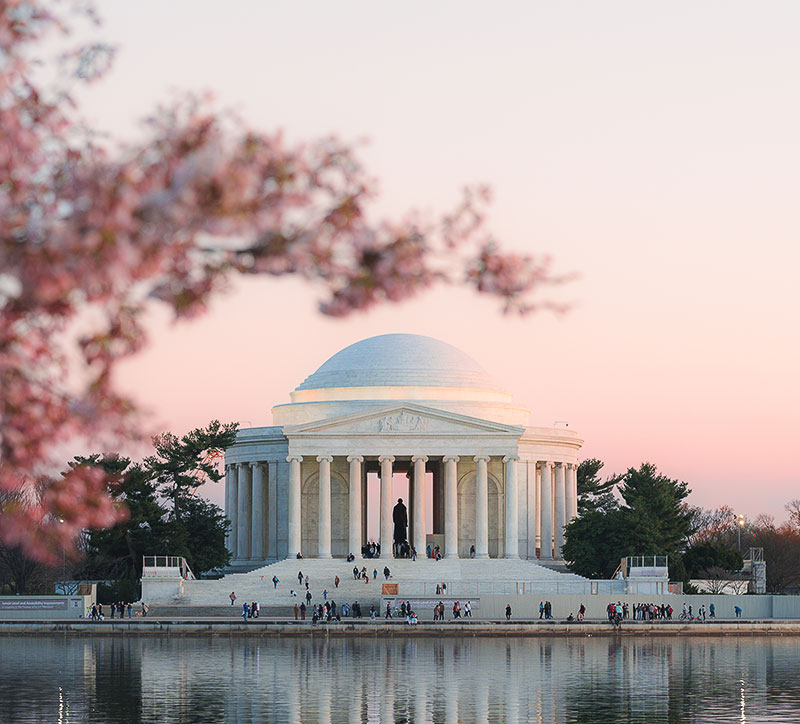
If you’re there to celebrate the words of the Declaration of Independence, it makes sense to visit the Jefferson Memorial, which, while technically on the mall, is on the opposite side of the tidal basin from most other memorials, so a bit off the beaten path but not hard to reach. (Those interested in Jefferson may want to visit his home, Monticello in Charlottesville, Virginia, a little more than two hours southwest of D.C. A closer home of one of the founding fathers is George Washington’s Mount Vernon, about 16 miles south of the Washington Monument and worth the trip as the spacious estate on the Potomac River has been well preserved and showcases many aspects of 18th century life.)
Learn more about the inner workings of government with tours of Congress, the White House, and the Supreme Court. (Tickets can be requested through your representative in Congress, but some tours are available without them.) Tickets for a tour of the Capitol Rotunda are free and can be obtained online with a timed entry to help you plan your day.
* * *

BEYOND HISTORY
The National Zoo, part of the Smithsonian Institute, is located in Rock Creek Park about three miles northwest of the Washington Monument. It’s free, but entry passes are required and can be obtained online. (Parking is not free, however, and you’ll save $10 by paying in advance online.) The giant panda exhibit is a highlight, but the 163-acre zoo also offers many impressive habitats to explore and is home to nearly 400 species.
The National Children’s Museum is another way to entertain the kids, with a three-level jungle gym with climbing ropes and slides. The U.S. Botanic Garden is the oldest continuously operating public garden in the country.
* * *
HISTORIC STAY
The Hay-Adams was designed as a residential hotel in the 1920s and retains the era’s charm. It’s also about the closest you can get to staying at the White House without a presidential invitation. The 145-room hotel features views of Lafayette Square and the White House.
More info: washington.org
* * * * * *
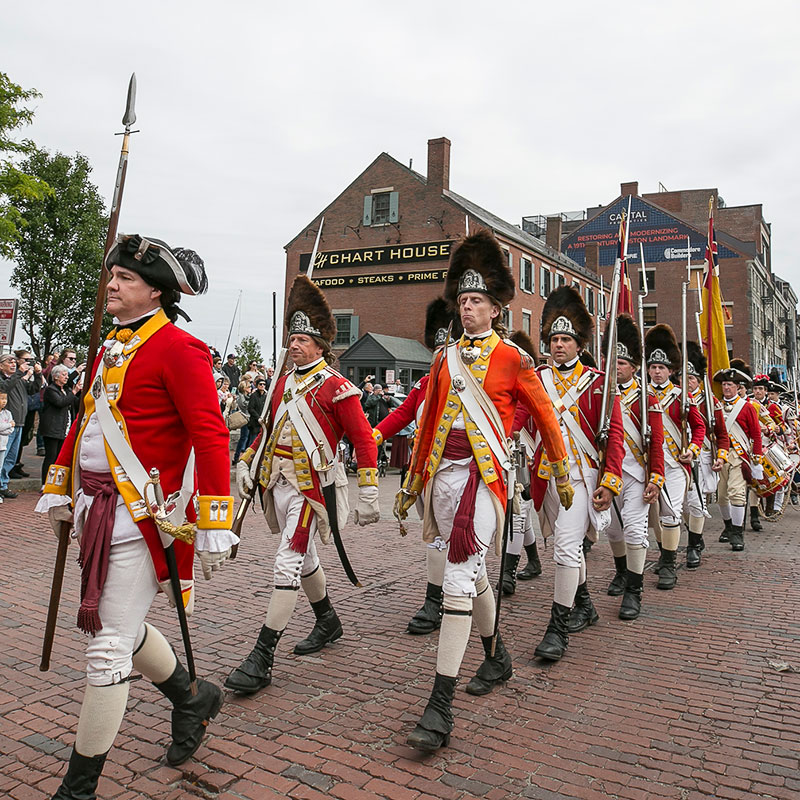
FUN FACT: Boston’s Freedom Trail
One of the best ways to learn about the fight for American independence is in Boston, where the Freedom Trail offers a walkable history lesson that visits many of the Revolution’s most prominent sites. The 2.5-mile path through central Boston can be explored on a self-guided tour or with a guide, often in the persona of an 18th-century revolutionary. Stops include Boston Common, the Old State House, Faneuil Hall, the Bunker Hill Monument, and the site of the Boston Massacre.
More info: meetboston.com

America’s Oldest City
Settled more than 400 years ago, St. Augustine offers a glimpse at a lesser-known part of American history
There’s nothing wrong with wanting a beach vacation. There’s also something to be said for taking at least some time to explore beyond the sand. St. Augustine, Florida, offers a mix of beautiful beaches on the Atlantic coast with a history that dates back to before the founding of the country.
Founded in 1565, the city is the oldest continuously occupied European-established settlement in the country. It predates the Jamestown settlement by 42 years and the Pilgrims’ landing at Plymouth Rock by 55 years. It was founded by Spanish explorer Pedro Menendez de Aviles, who first spotted Florida from the sea on the feast day of St. Augustine.
A British invasion in 1702 destroyed nearly all the original buildings, with the exception of the fort. But the Spanish influence remains in the town plan as it was originally laid out, and the architecture reflects the narrow streets and balconied houses common in Europe. Today, you’ll find 36 buildings that date back to colonial times, as well as 40 that are reconstructed from models from this period. The look and feel of the historic center are quite different from those of most other colonial-era settlements that have survived.
Add to that a Florida beach vacation, and you have a setting for a memorable trip.
* * *
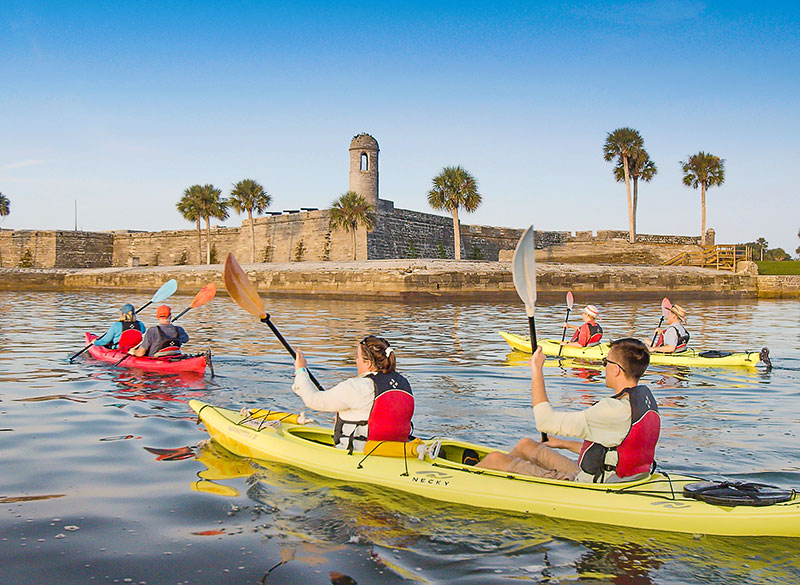
HISTORIC SITES
The oldest building is the Castillo de San Marcos National Monument, the fort that survived the British invasion and was built between 1672 and 1695, making it the oldest masonry fort in the United States. It was retired from use as a fortification in 1900 and became a national monument in 1924. Visitors today can take a short tour and enjoy a 20-minute presentation on the area’s history. There are also historical reenactors and weapons demonstrations (such as firing the cannon) on many weekends throughout the summer.
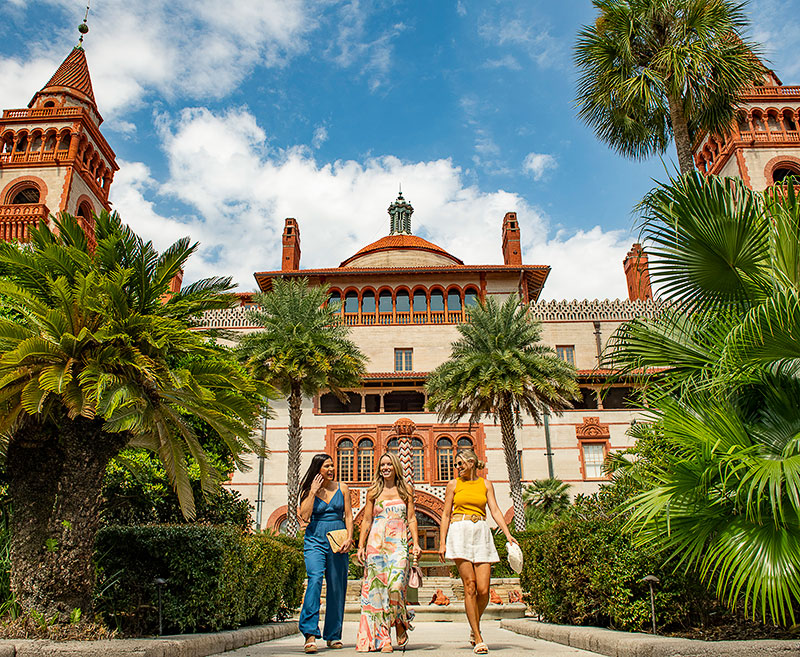
The Oldest Wooden School House Historic Museum & Gardens features a preserved structure from the late 1700s, built by Minorcan homesteaders, a unique ethnic group of North Florida descended from indentured workers (primarily from Menorca, Spain). Take a tour of Flagler College, which now occupies the former Hotel Ponce de Leon. The hotel, built in 1889 by railroad magnate Henry M. Flagler, was one of the most exclusive resorts of its era and is a prime examples of Spanish Renaissance architecture.
Speaking of the famous Spanish explorer, the Ponce de Leon’s Fountain of Youth Archaeological Park offers historical presentations as well as the Spring House, which features water from the spring of the original Spanish land grant.
About 15 miles south is the Fort Matanzas National Monument, which preserves the watchtower built in 1742 to protect the southern approach to the city. More importantly for people visiting today, it now protects about 300 acres of the natural Florida coast, including dunes, maritime forests, and marshland. You’ll need to take a ferry to the fort, which helps preserve its natural setting.
* * *
BEYOND HISTORY
The area features more than 42 miles of beaches, including Ponte Vedra Beach, a community known for its white sand, luxury resorts, and challenging golf courses. Anastasia State Park features some of the area’s most beautiful beaches amid a protected wildlife area that’s popular with birders. Throughout the area, you’ll find ample opportunities for cycling, surfing, kayaking, and fishing.
Plan a dolphin encounter at Marineland Dolphin Adventure, an oceanarium that also features sea turtles, cownose rays, nurse sharks, and red-footed tortoises. Animal lovers also may enjoy the St. Augustine Alligator Farm Zoological Park. The St. Augustine Pirate & Treasure Museum features more than 800 artifacts documenting the age of piracy in the region, both factual and fictional.
* * *
HISTORIC SITES
Located in the heart of the city’s historic district, the Casa Monica Resort & Spa dates back to 1888. Now a Marriott property, it was restored in 1999 and boasts elements of both Moorish Revival and Spanish Baroque Revival architectural styles.
More info: floridashistoriccoast.com
Photos: Visit Philadelphia: J. Fusco (Independence Hall); C. Ridgeway (Elfreth’s Alley); D. Knoll (Liberty Bell); G. Widman (Betsy Ross House); Old World Wisconsin; Conner Prairie; Colonial Williamsburg Resorts; The Henry Ford; washington.org; FloridasHistoricCoast.com
