




Barton Robertson
By Naperville Magazine
View more Spotlight
This first-time Oswego author uses his real-world experience to craft a (hopefully) fictional dystopian world
By Jeff Banowetz
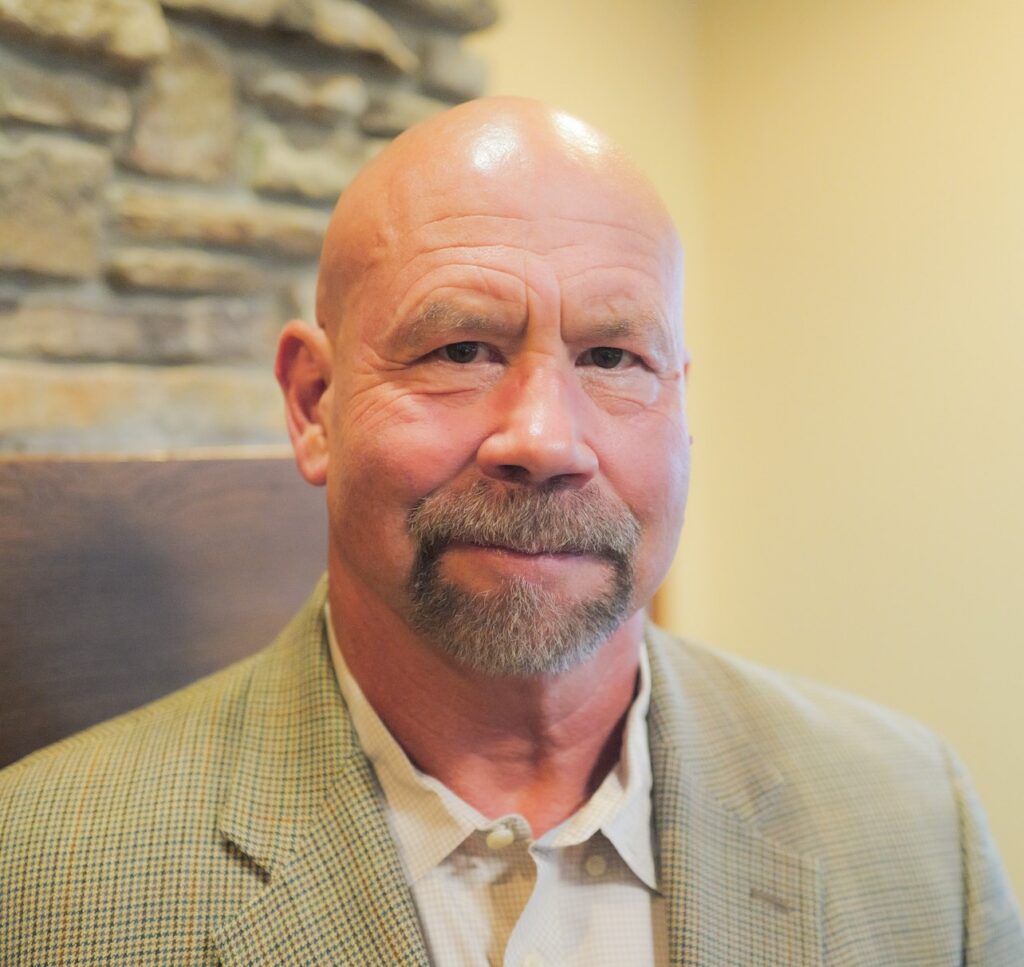
Barton Robertson has spent more than 20 years running a business in which he goes into people’s houses to solve a problem: mold. Well, that and other nasty things that can be lurking behind the drywall, in the attic, or among the boxes in your basement.
In 2003, Robertson founded Above Board Indoor Environmental in Naperville to help homeowners with all kinds of indoor contamination, mostly from moisture issues that cause unwanted things to grow. (Robertson and the business have since relocated to Oswego.) He became an expert in mold remediation and indoor air quality—and he had no ambition to become a writer. But one day, he got an idea: What would happen if the mold evolved into something deadlier, and you couldn’t kill it?
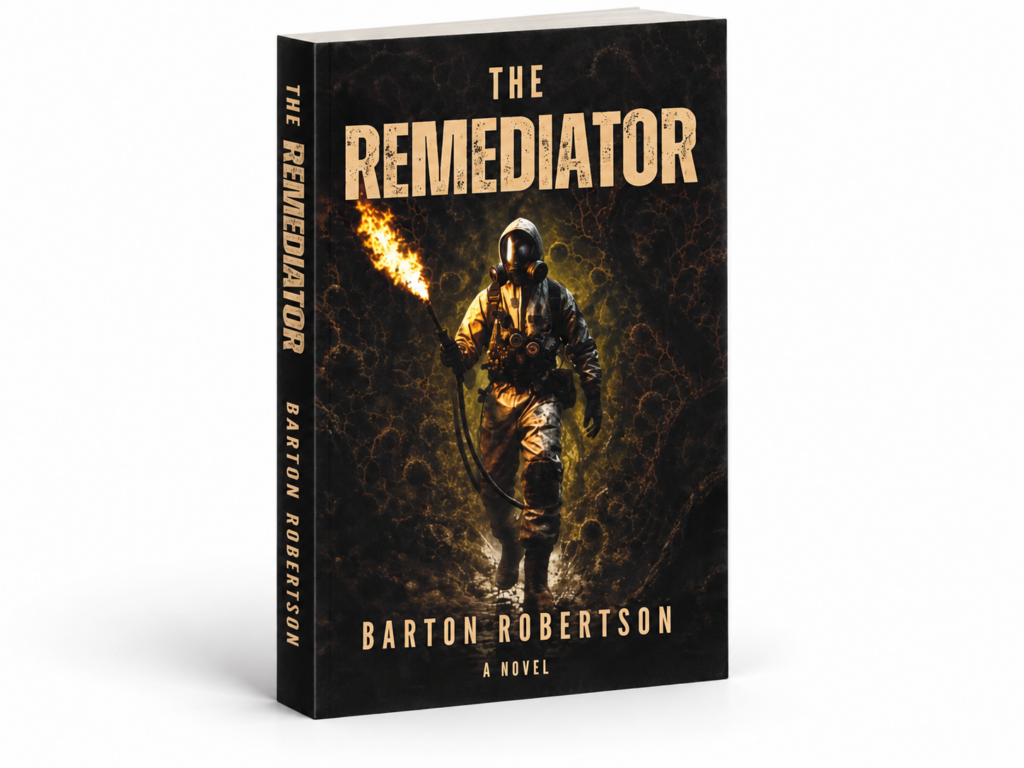
That spark of an idea got him to start writing. He’d always enjoyed thrillers, and this seemed like an idea ripe for a page-turner. The result of his efforts is his first novel, The Remediator, which was published this summer. It involves a “mysterious fungal network” that spreads across the country, destroying cities and infecting anyone who inhales its microscopic spores.
Q: Was there a specific experience that gave you this idea?
A: The original incident took place in Ottawa. I was inspecting a crawl space, and there were no foundation walls. It was just mud, and there was almost a river running through it. Mold was everywhere. It was dripping from the subfloor and floor joists and wrapping all the pipes—all these places you don’t typically see it growing. It was as if the house had come alive. And I started thinking: What happens if someday the stuff that we know kills this no longer kills it? Could it actually start spreading? What if someone could make this stuff do even stranger things? The more I thought about it, the more I thought it would make a good book.
Q: Had you ever written before?
A: No. Maybe that’s why it took me three years to write it. I had many, many start-overs. But I was lucky to find a good editor. I was also fortunate to know the field so well. Even though everything I write about pushes the limits, I found my own experience very helpful in thinking about how these things would play out.
Q: How hard was the writing process?
A: It was basically something that I’d do at night and on weekends. I thought I’d finished after about two years, and I was pretty happy with it. But then the editing began. That was the hardest part, working with an editor who asked hard questions and made me rethink different characters and possibilities. I thought I was done! But in the end, it definitely became a much better book through the process.
Q: Are you a fan of science fiction?
A: I do like science fiction, but I’d say I’m more a fan of thrillers. I love a thriller from someone like Dan Brown, where it grabs you and doesn’t let go until you’re done with the book. Every chapter pulls you in deeper. That’s really what I was hoping people would feel with this book.
Q: How did you get in the mold remediation business in the first place?
A: I had started at a company that worked on indoor air quality—it wasn’t really mold but indoor venting and stuff like that. At the time, there really weren’t a lot of people doing this in Illinois. I wanted to have my own business in something related to the trades, and I was talking to a friend who said something like, “Mold is going to be the next asbestos,” so I did some research, and it turned out that Illinois didn’t have any standards of practice or licensing for mold removal…I started getting really involved in learning everything I could about the proper procedures and protocols. It took a while, but eventually [the industry] developed an understanding of how to deal with these issues.
Q: So, as an expert in mold remediation, how likely is it that something like this could happen?
A: I don’t believe that it could really happen. This is fiction. But that said, under the right circumstances and properly altered, somebody could do something pretty nasty with mold.
Q: So we now have another thing to worry about?
A: Yep.
Photos: Barton Robertson
