


Feeling Philanthropic?
By Naperville Magazine
View more 630Art FormsFeatured
These volunteers From six organizations illustrate why helping others is not only good for the community—it will make your life richer as well.
by: Jeff Banowetz
1. Caring for Wildlife
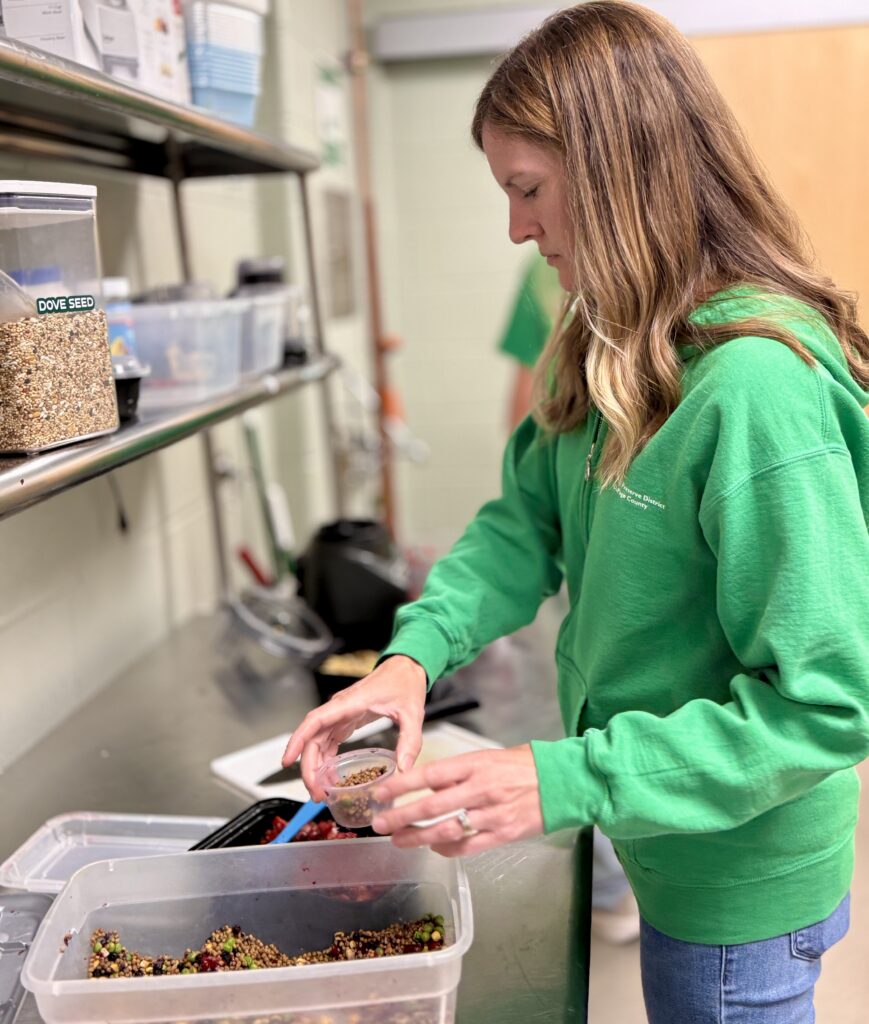
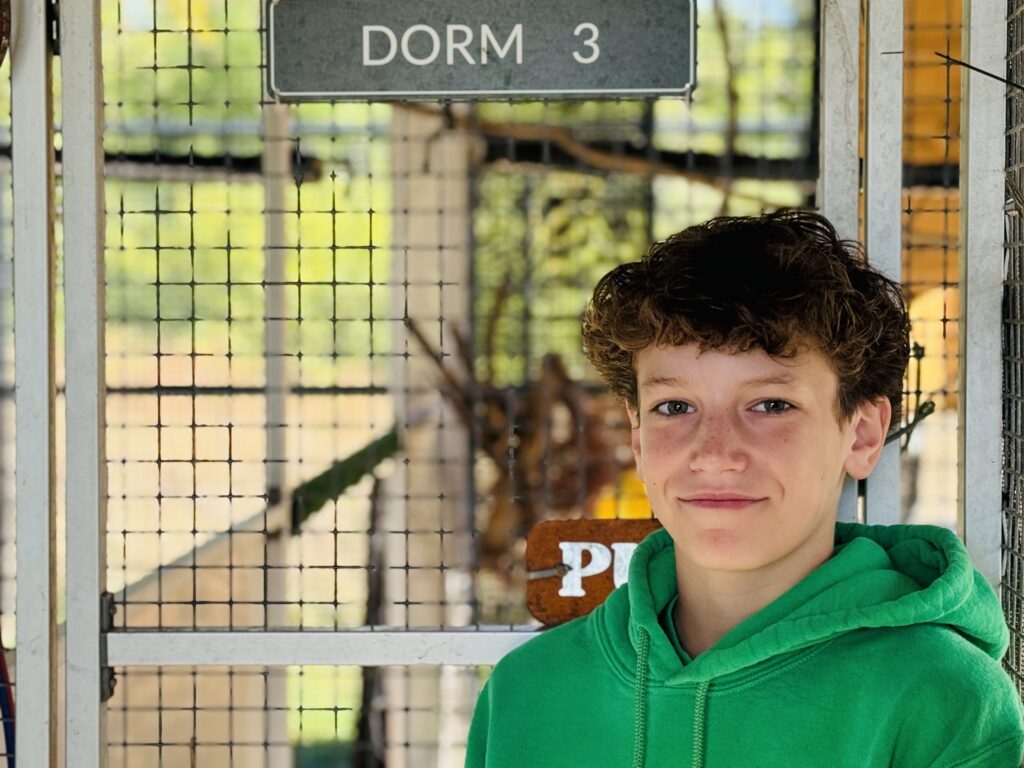
Laurie Kurtz was always an animal person. She likes to tell the story of how, when she was waiting for a bus for elementary school after a hard rain, she would pick up the worms on the sidewalk and put them back in the yard. “I’d tell the bus driver, ‘I can’t get on yet, I have to save these worms first,’ ” she recalls with a laugh.
So it’s no surprise that the Naperville resident discovered the DuPage Wildlife Conservation Center about a decade ago, when it was known as the Willowbrook Wildlife Center. The Glen Ellyn facility, run by the DuPage County Forest Preserve District, may have changed its name after an extensive renovation, but it has the same mission of providing care and medical treatment to “injured, orphaned and sick native wild animals.” This includes everything from coyotes, opossums, squirrels and turtles to a wide variety of birds like hawks, owls, geese, and ducks, among many others. “I’ve always loved nature centers,” Kurtz says. “My first visit [to Willowbrook] was with my daughter’s Girl Scout troop…so it was always on my radar.”
Once her kids were a little older, she decided to become a volunteer. “I wanted to do something with the community, and I just love their mission,” Kurtz says. “The fact that they’re caring for these animals and that they’re able to be rehabilitated to go back out and live in the wild, that’s always been amazing in my eyes.”
Kurtz spends her time there doing “a little bit of everything” involved with caring for the animals. “You’ll clean up, you’ll scrub, you’ll hose down,” she says. “You’ll bring the dishes back and get food. Sometimes you prepare food. If you’re inside working with birds, you might be weighing the birds or giving them some medication they might need.
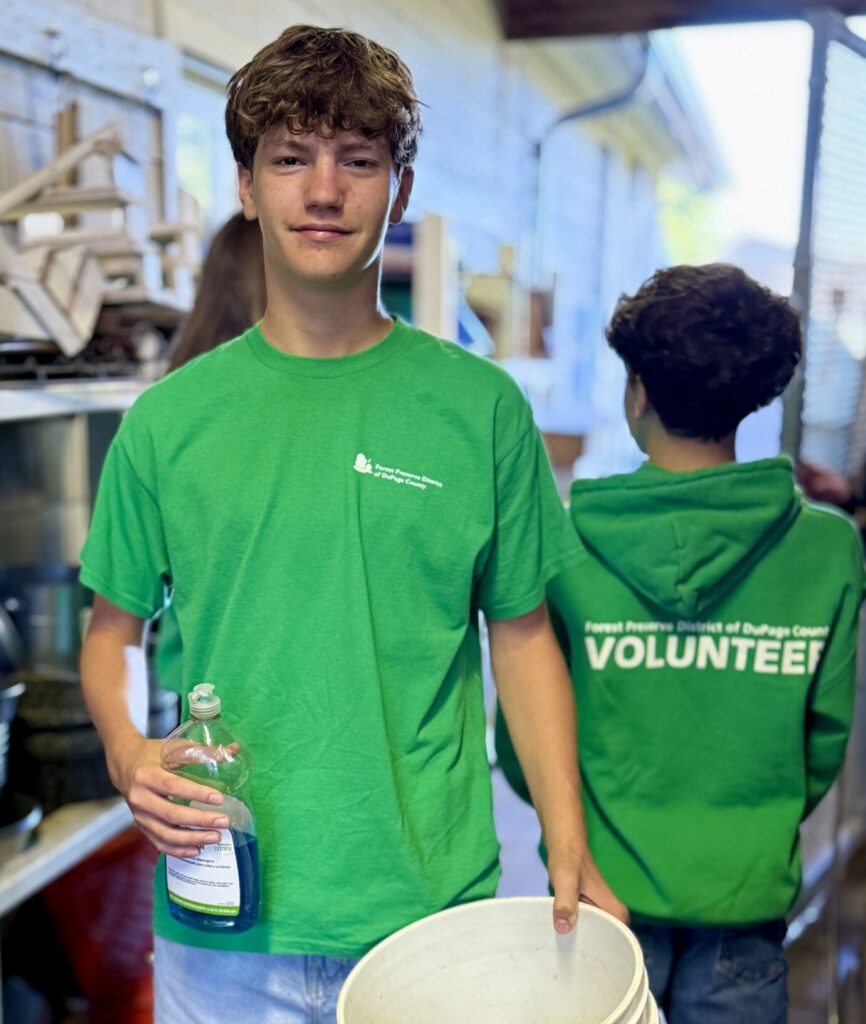
She generally works a four-hour shift, once a week. “It’s nice that you get to know people, and you really develop friendships over time,” she says. Once her boys, Ryan and Nate, became old enough to help out, they started joining her for shifts during the summer. “It’s something that we’ve enjoyed together.”
Since the new facility opened up, visitors can watch some of the work being done—including surgery—from behind large windows. “If you haven’t been here since it reopened, it’s been quite a change,” Kurtz says. “It’s an incredible facility that’s doing such good work.”
2. Staying Young at Heart
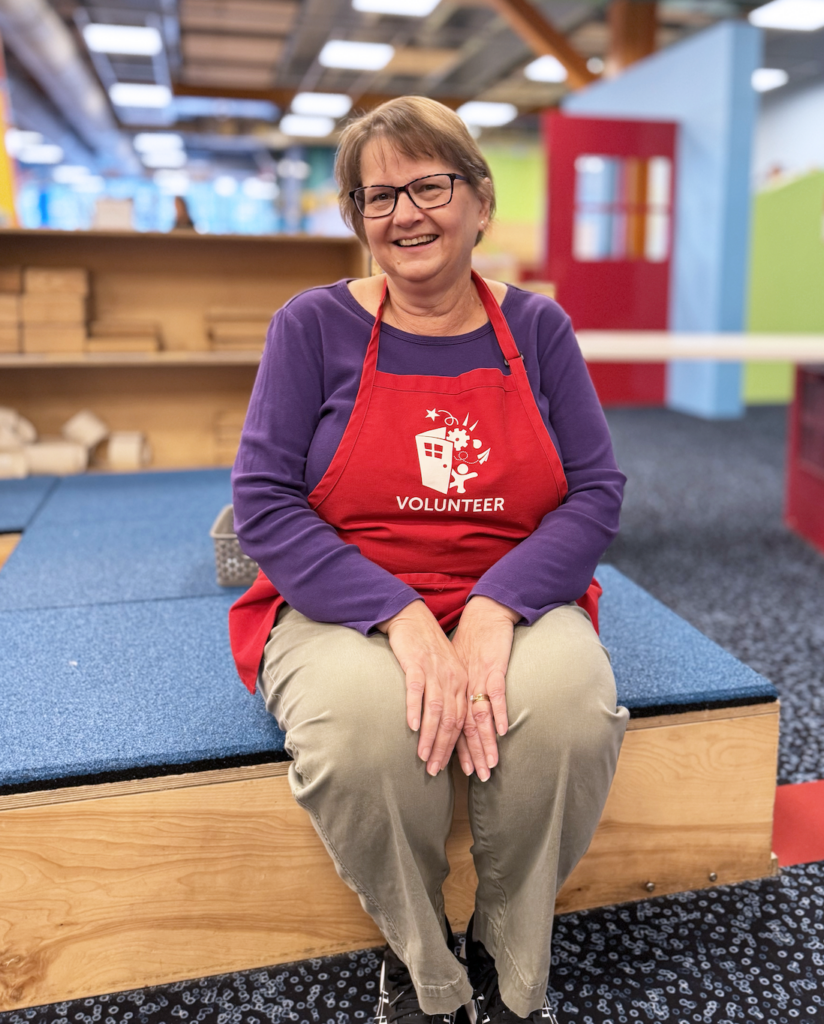
Mary Stratka volunteers at the DuPage Children’s Museum.
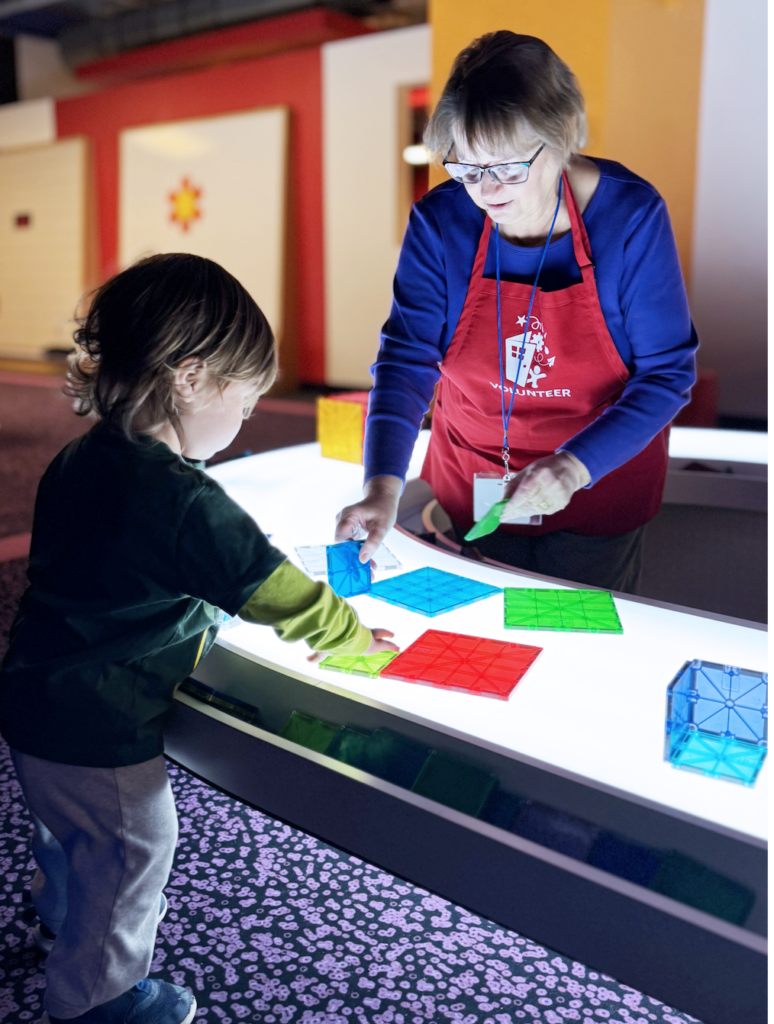
Mary Straka wasn’t sure how she would spend her time after she retired. For 33 years she had worked as a librarian at Argonne National Laboratory, and while she knew she wanted to stay busy, she wanted to try something different. After a bit of research looking at nonprofits in the area, the Wheaton resident found something that sounded like fun.
“I get to play,” she says about volunteering at the DuPage Children’s Museum. “I first met with them and found that they have an incredibly organized volunteer program. It has a lot of flexibility, which I like. I thought this would be a refreshing change, and it has been.”
Founded in 1987, the DuPage Children’s Museum now attracts more than 320,000 people each year to enjoy its hands-on exhibits for kids 10 and under. Each exhibit is designed to spark curiosity and engage kids in hands-on activities.
Straka’s usual shift involves attending an exhibit and being a resource for kids and adults. “We are watching what’s going on and helping reset exhibits so the next child can play,” she says. “We answer questions from parents and nannies, but it’s really just getting to enjoy the time with the kids and experience their joy as they learn, which is pretty incredible.”
She typically volunteers one two-hour shift a week, which she says is the perfect amount of time for her. And if she needs to spend time with her own granddaughter, who lives in Indianapolis, switching shifts around isn’t a problem. “I think that’s an important point, because some people are scared away from volunteering because of the commitment they have to make,” she says. “But two hours a week isn’t very long. It still allows you plenty of time for other things.”
Her time at the children’s museum isn’t the only volunteer work that Straka does, but it’s typically one of her favorite parts of the week. “I get more out of it than I put into it,” she says. “I understand that maybe that’s not for everybody, but I do think it’s important to be out in the community doing something useful. And it’s also a lot of fun.”
3. Finding Solutions for Homelessness

Karen and Nelson Santos at the Hesed House Derby Party
Karen Santos grew up in Canada and came to Naperville in 2007 with her husband, Nelson, and two young kids. She learned about Hesed House in Aurora through an event at Nelson’s company. The organization, established in 1983, is the second-largest homeless shelter in Illinois. More than 7,500 volunteers work there each year to help people move back to independent living. In 2018, Santos decided to find out if volunteering would be a good fit for her.
“It’s such a comprehensive program,” Santos says. “It’s not just about food and shelter. People come in, and we really dig in to find out why they’re homeless and what we can do to help them get out of homelessness. Is it because you lost a car, so you lost your job? You couldn’t pay your rent? Is it an abuse problem? We’ve got counselors onsite. We’ve got doctors onsite. We’ve got lawyers onsite. We help them write résumés, get them back in the workforce. We offer just about everything you can think of because we don’t want people to stay there. We want them to get back out in the community and back on their own feet.”
Once she got involved with the organization, her background in sales helped her get appointed to the board that plans the annual Derby Party, Hesed House’s biggest fundraising event each year. She’s still very involved in planning the event and sits on the organization’s board of directors, also helping with other fundraisers the rest of the year.
The Kentucky Derby–themed party draws about 450 people. “It’s just a great event,” she says. “Everyone shows up in their biggest, frilliest outfits, and we do a hat contest and other Derby-themed elements.”
Hesed House offers a wide variety of volunteer opportunities. Serving a meal is how most people start, but there are additional opportunities across the other operations that keep the large facility running, from collecting donations to guest services.
“I don’t think people have any idea there are this many homeless people so close to us,” she says. “This is happening in our backyard, and this is a way to really make a difference.”
4. Finding Pets a Home
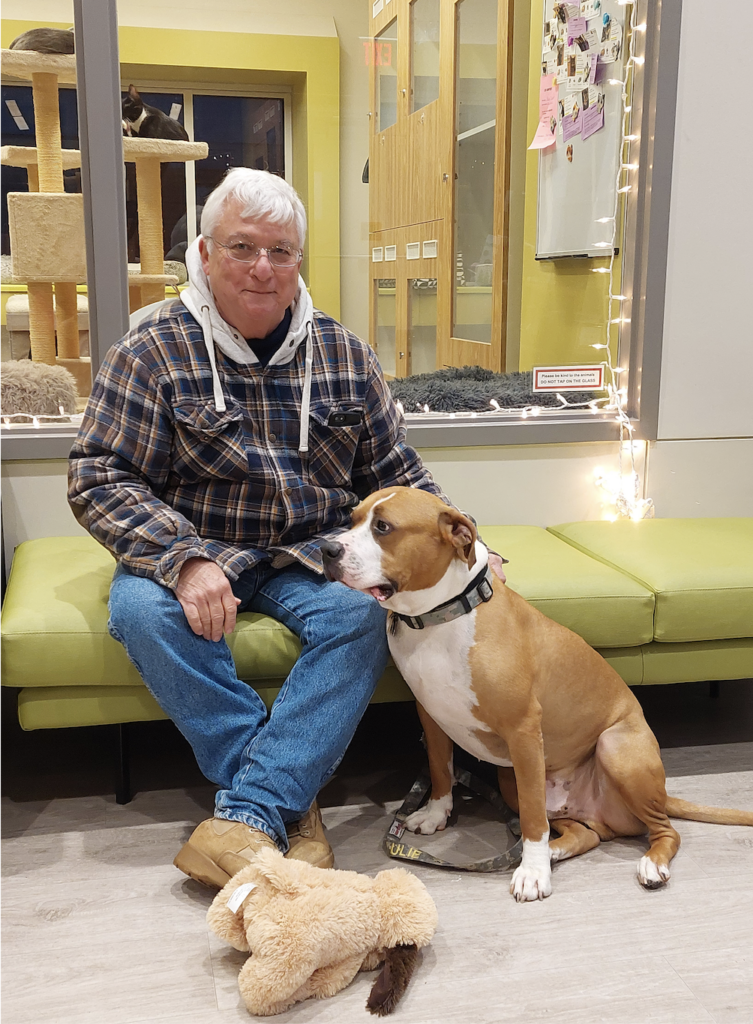
Jim Vinopal and Paulie at the West Suburban Humane Society.
Jim Vinopal made a trip to the West Suburban Humane Society in Downers Grove during a rough time in his life. Six months after he lost his wife to Parkinson’s disease, his dog of 10 years died. A longtime animal lover, he packed up the dog’s unused supplies to donate them to the Humane Society.
“I just started talking to people at the front desk, and the next thing you know, I’ve been there for five years,” Vinopal says. “I’m there every Monday morning, and I don’t think there’s more than two or three Mondays I missed over that time.”
The West Suburban Humane Society was founded in 1972 as a “lost and found” pet retrieval service, helping connect owners to their lost pets. It evolved into a shelter for homeless animals and now houses up to 25 dogs and 60 cats at a time. In a year, the Humane Society typically finds homes for 600 animals. It also became a second home for Vinopal, who lives in Bolingbrook. “After my wife was gone and my dog was gone, I met these people,” he says. “They were very supportive of me, which made me feel really good about helping these animals.”
He also found a new canine companion, Paulie, whom he adopted about four years ago. “He’s one of those dogs that likes people, but he can’t live in people’s houses with other animals,” Vinopal says. “He kept coming back to us. And people started hinting to me, you should really take Paulie. So I ended up bringing him home, and there he stayed.”
Vinopal’s job at the Humane Society involves cleaning and caring for the animals, including walks and monitoring their health. “I’ve gotten good with the dogs that need a little bit more attention,” he says. “You might say they’re more difficult. But I enjoy getting to know them. Of course, it’s also always fun to play with the puppies.”
He’s also become involved in some of the fundraising and adoption events the shelter organizes.
“People may say Disneyland is the happiest place on earth,” Vinopal says. “But they’ve never been to the West Suburban Humane Society.”
5. Putting Skills to Work
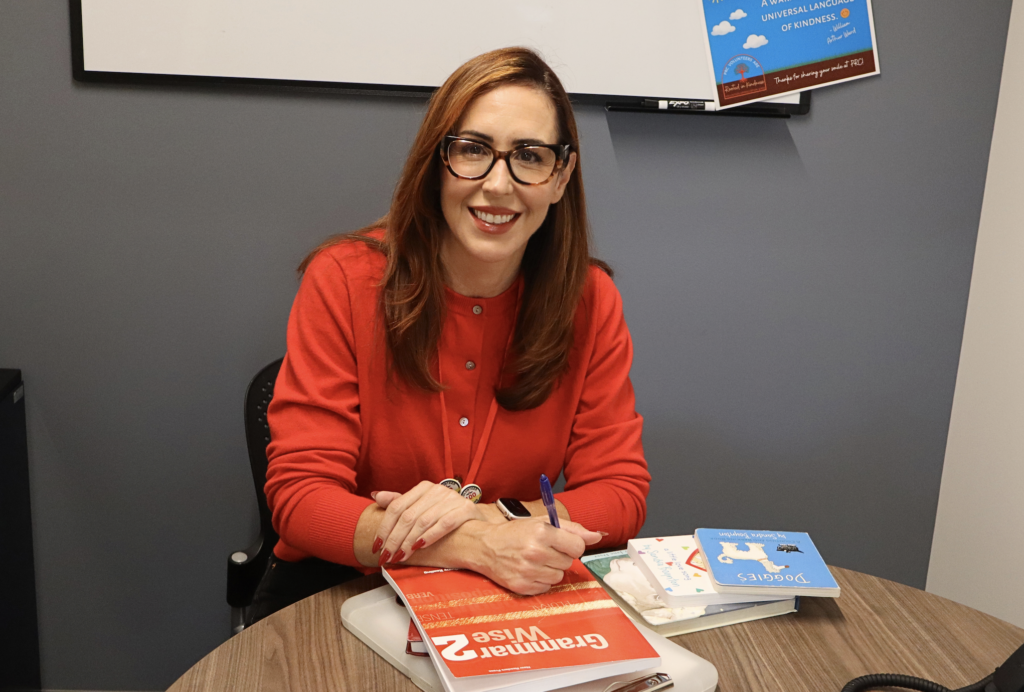
Lindsay Greene volunteers at the People’s Resource Center.
The People’s Resource Center has been working to fight hunger and poverty in DuPage County since 1975. But Lindsay Greene wasn’t aware of the PRC when she started looking for a place to volunteer. She was new to Illinois and wanted to get more involved in the community. “I didn’t know that many people yet, so I found a volunteer portal that listed all kinds of opportunities in the area,” Greene says. “I happened upon PRC, and I was almost dumbstruck by how closely it matched my values and the way I wanted to get involved. I loved their tagline of ‘neighbors helping neighbors’ and working to meet basic needs and also delivering empowerment programs. Fast-forward two years later, and I’ve absolutely been able to see that working.”
Greene started by getting involved in the PRC’s adult literacy program. Because she speaks Spanish, she also was able to help out at the food pantry in West Chicago, which has a primarily Spanish-speaking clientele. “There was a need for volunteers who could communicate with that community, so I’ve basically gotten involved with those two parts of the organization—and I love them both,” Greene says.
PRC serves more than 22,500 DuPage residents each year with basic services (like food and clothing), as well as job assistance, adult literacy, and computer training.
More recently, Greene has added the PRC’s job fair to her list of volunteer work. “If you’ve never witnessed one of our career fairs, they are such a thing to behold,” she says. “They serve close to 500 members of the community.”
Greene continues to explore other PRC programs. “The lovely thing about volunteering is that you can give the time you have to give,” she says. “PRC has so many different ways they serve the community, so volunteers can really give according to their unique strengths and skills.”
Her volunteer work over the last two years has also helped her to meet people and make inroads into the community. “There’s an adage that says the fastest way to get happy is to help someone,” Greene says. “And so I think that’s really true about volunteering. In my research, I found so many options in the area. There’s undoubtedly going to be an organization that serves the community in a meaningful way and that needs volunteers and is a right match for you.”
6. Kids Helping Kids
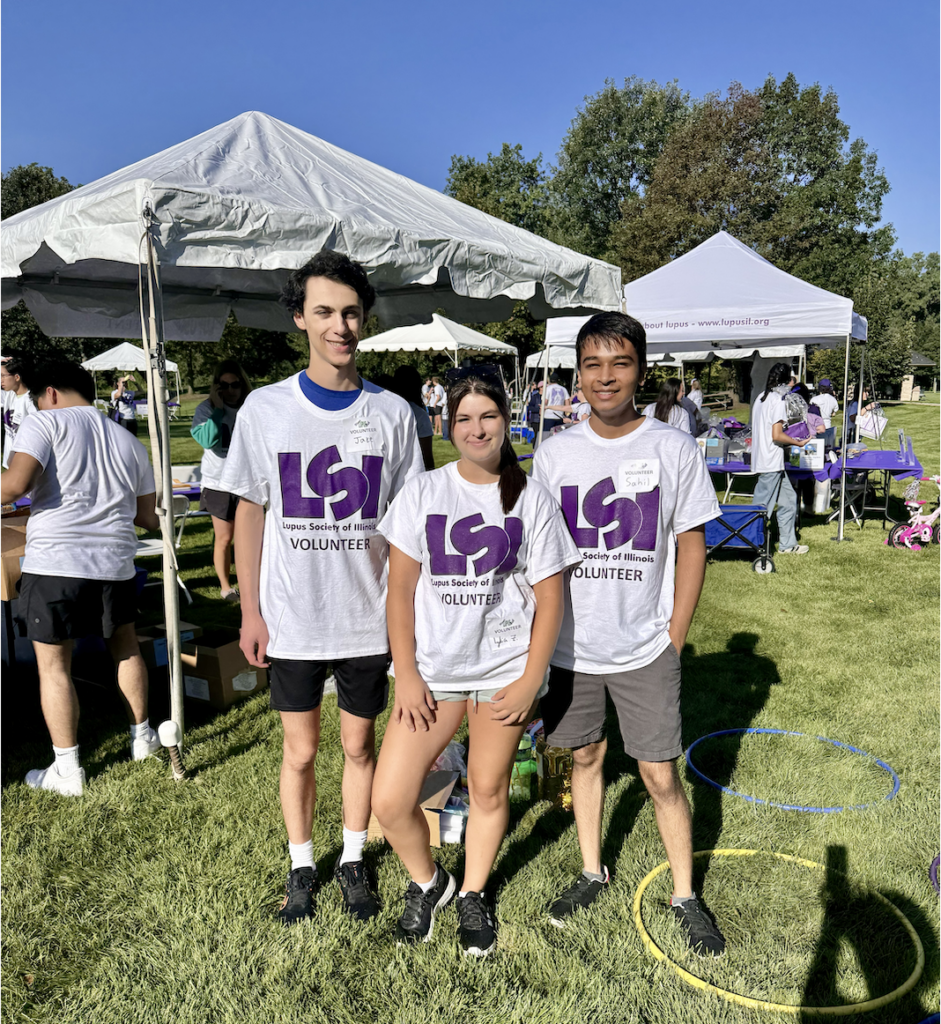
Lydia Zbiegiel (center) volunteers through KidsMatter.
Learning about philanthropy started early for Lydia Zbiegiel. Now a senior at Naperville North, she began a program last year as a junior through KidsMatter in Naperville that helped her and her classmates better understand how nonprofits work. “I’m involved with the program called TPI, Teen Philanthropy Initiative, where we work to understand the philanthropic process,” Zbiegiel says. “We work with nonprofits in the area, do some volunteering, and we get to give away $10,000 to deserving nonprofits in the area.”
The TPI program involves a two-year commitment from the 30 teens in the program, which is done in partnership with North Central College. Students learn about grant-making and launch their own fundraising campaigns. “It’s such a unique program—it’s not something you find in a lot of places,” Zbiegiel says. “I feel lucky to be a part of it.”
TPI is just one of the programs organized by KidsMatter, which was created by Edward Hospital in 2001 as a “community-wide prevention health strategy to combat teen destructive behaviors.” It works with a wide variety of other organizations—including schools, faith-based communities, public safety agencies, and mental-health professionals—to provide information to both children and parents to help them through difficult situations and promote healthy development.
Zbiegiel has found additional volunteering opportunities through KidsMatter. “We get in touch with a lot of different nonprofits in the area, and anyone who’s hosting an event that needs extra teenagers to help, we usually can help out,” she says. This includes working at a running race, staffing a tent for kids’ activities at an event, or helping out a food pantry. “It’s stuff anyone can do, and it’s usually a lot of fun,” says Ziegiel, who plans to study psychology in college next year. She has found her experiences very rewarding. “I love meeting new people, seeing new faces, and hearing their stories. It’s amazing to know that I could do something to make their day a little bit better.”
Photos: Jen Banowetz; DuPage Children’s Museum; Karen Santos; Jim Vinopal; People’s Resource Center; Kidsmatter
